


Should you come across a plane dropping matchbook sized packages across Western North Carolina, don't be alarmed, it's the state's way of keeping rabies at bay...
The North Carolina Department of Health and Human Services is working alongside the U.S. Department of Agriculture to help prevent the spread of rabies.
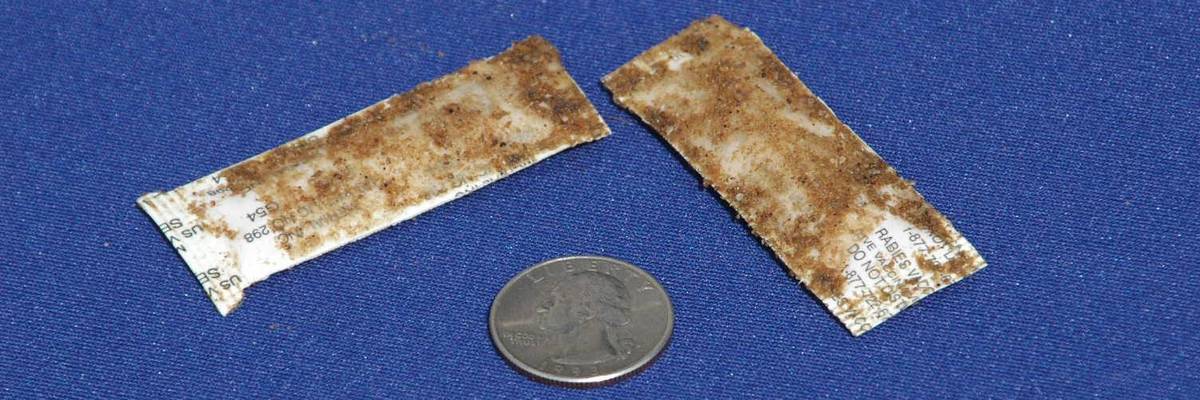 Oral rabies vaccination bait packUSDA
The program, established in the 1990's, helps prevent the raccoon rabies epizootic from moving west of the Appalachian Mountains, where raccoon rabies does not exist according to DHHS.

Approximately 600,000 baits are expected to be distributed in the Tarheel state, with Asheville being treated right now by hand. This weekend, October 9-13, 2026, helicopter baiting will cover the greater Asheville area then the following week, October 15-22, 2026, low-flying airplanes will drop baits containing oral rabies vaccine throughout Western North Carolina.
The baits are about the size of a matchbox and coated with fishmeal to attract raccoons. Inside is a small packet of oral rabies vaccine.
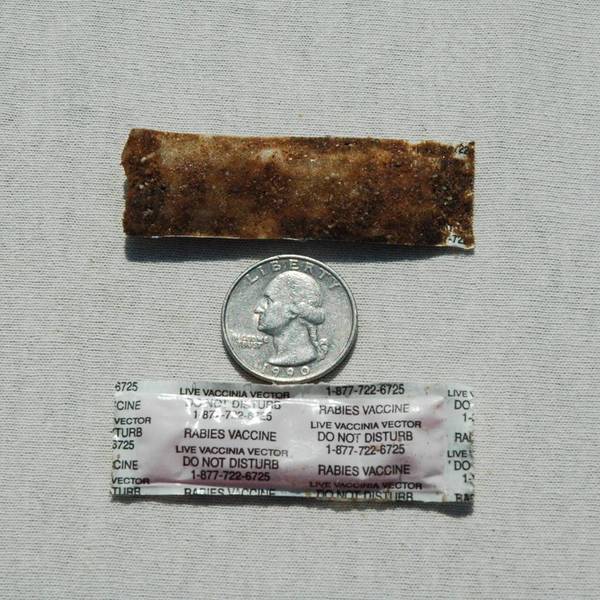 Oral rabies vaccination bait packUSDA
DHHS says the baits are very unlikely to harm people, pets or other animals if touched or eaten. But you may notice a strong fishy smell.
Should you or your pet find a bait, the NCDHHS says:
Leave it where it is unless it’s in your yard, driveway or somewhere raccoons won’t likely find it. In that case, move it to a wooded or brushy area using gloves or a towel.
Do not try to take a bait out of your pet’s mouth. Eating a few baits will not harm pets, but it could upset their stomach.
Wash your hands with soap and water if you touch a bait, especially if the packet inside has broken.
Teach children not to touch the baits. If someone swallows a bait packet, call your local health department or the number on the bait: 1-877-722-6725.
Throw away damaged baits by placing them in a bag (wear gloves) and putting them in the trash.