


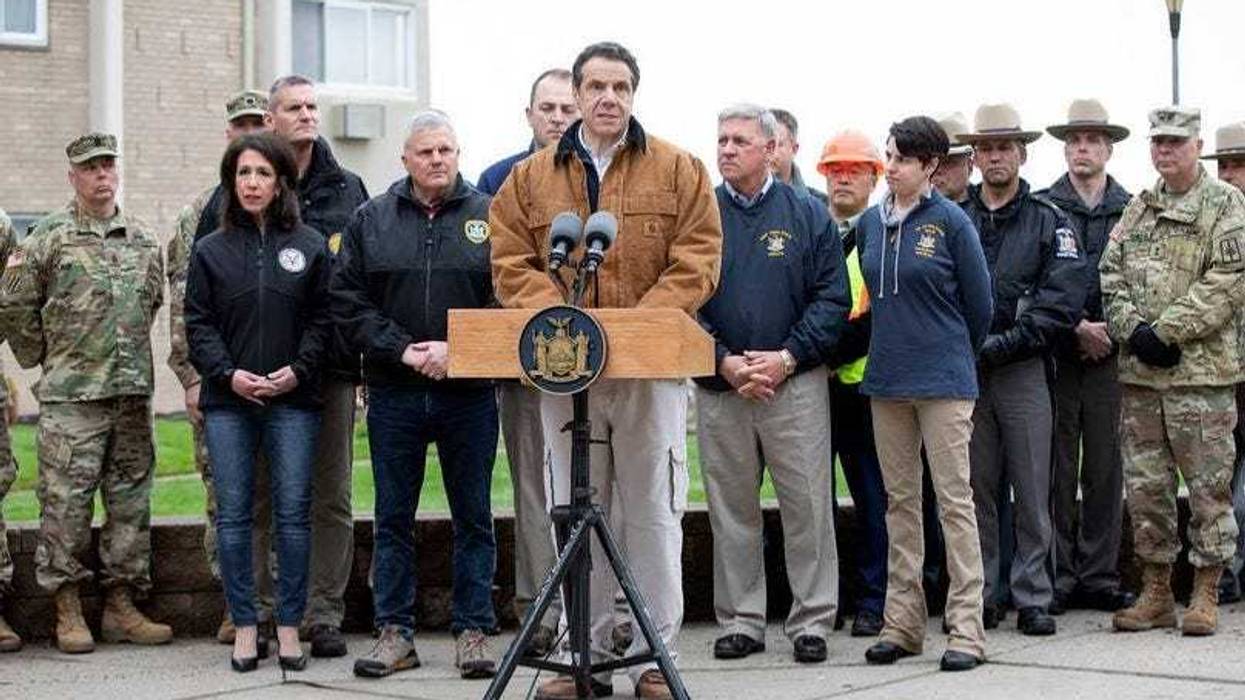

"Our immediate concern is the emergency preparation in case of flooding, which has the potential to impact the entire northern coast of the state," Governor Cuomo said. "We are working with local communities to protect the shoreline including fortifying it with sand bags and an emergency aquadam, and we are deploying 100 members of the National Guard. I'm told five times a year that this is a one in one hundred year flood, but I believe these record levels are going to be recurring and we need to think about building back better with higher and more resilient shorelines. If the federal government passes its $2 trillion infrastructure program, part of that money should be used to rebuild our shorelines to make sure we are prepared for these new weather realities. And the IJC needs to do its part by better managing the water levels so they don't let it get to this point."
In addition to the Division's coordination efforts and deployment of resources the State Department of Environmental Conservation has issued a General Permit to address the potentially damaging effects of high water levels in Lake Ontario and the St. Lawrence River due to the ongoing above average precipitation and snow melt in the Great Lakes Basin. This permit, based on an Emergency Declaration issued by the DEC commissioner, will expedite the process for shoreline property owners to quickly make necessary repairs and stabilize their properties from flood damage. High water levels are projected to continue and may cause widespread shoreline erosion, damage coastline structures and jeopardize infrastructure similar to the historic flooding that took place in the spring of 2017.
The new permit is available on DEC's website. DEC will accept applications through April 30, 2020. The General Permit authority is in effect until September 30, 2020.
Permitted activities include:
Repair and in-kind replacement of erosion structures;
Repair or in-kind reconstruction of existing public roads, bridges, utilities, and other public infrastructure;
Stabilization of existing, functional storm-damaged dwellings, decks, and walkways with temporary bracing and piling; and
Removal of channel blockages in tributaries to Lake Ontario blocked by shoreline sediment.
Homeowners and municipalities with questions about the permits can contact their Regional DEC Permit Administrator.
Additionally, the State Department of Transportation (DOT) is overseeing sandbag filling operations in the eight counties bordering Lake Ontario, in cooperation with the Department of Corrections and Community Supervision which has provided work crews made up of between 5-12 eligible incarcerated individuals, who have filled almost 113,000 sand bags and worked on an aquadam deployments. DOCCS will continue to make additional crews available as the situation evolves.
DOT's incident command system has been activated for this weather event and maintenance staff are deploying DHSES equipment such as water pumps and aqua dams to strategic locations bordering the Lake in anticipation of flooding. Crews are also readying response equipment, inspecting drainage structures in low lying areas, and inspecting culverts for debris. The New York State Power Authority and Canal Corporation have also provided assistance in transporting resources to affected communities.