

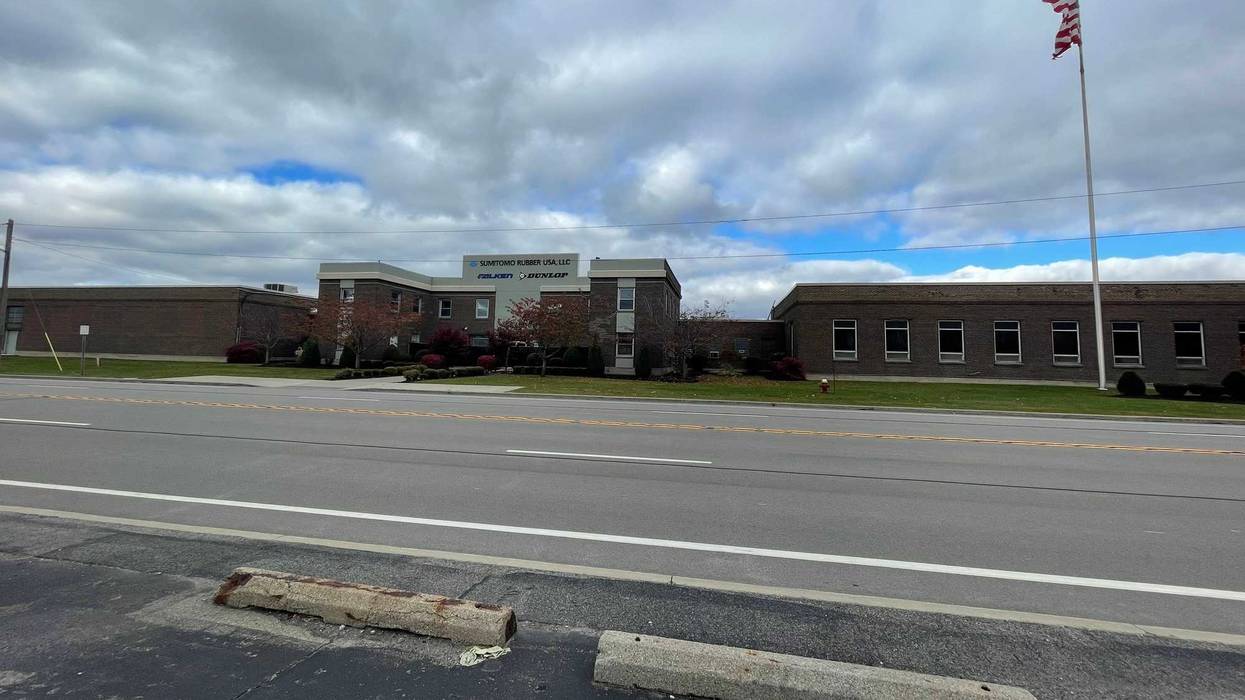

Buffalo, N.Y. (WBEN) - While the sudden closure of the Sumitomo Rubber plant in Tonawanda left several in Western New York in complete shock on Thursday, there may be some legal repercussions to result from the closure as well.
Local labor and employment attorney, and partner at Lipsitz Green Scime Cambria LLP, Robert Boreanaz represents the unions that are the workers that build tires, and also the workers that are injured through workers comp out of Sumitomo. He says at this time, he's digesting the circumstances of whether or not Sumitomo violated the WARN Act at both the state and federal level.
"Under the federal WARN Act, generally they're supposed to be providing of a plant closure of this size 60 days advanced notice of the closure. Under New York law, there is an expansion of that to be 90 days advanced notice of a plant closing. Generally speaking, plants in New York are going to be held to that higher standard of providing 90 days advanced notice," explained Boreanaz during an appearance on "Bauerle" on Thursday.
When speaking with employees of Sumitomo Rubber shortly after the plant's closure in Tonawanda on Thursday, WBEN learned that none of them were previously informed of any potential closure. Some of the workers were informed of the immediate closure through word of mouth, through local news outlets, and even some on social media.
That raised an immediate red flag for Boreanaz.
"Most of the times when we get involved with WARN Act issues, the question becomes, how many people are they laying off? Are they actually laying people off? Are they closing the plant? Are they not closing the plant? Does the WARN Act apply, and are they required to provide some type of notice? From what we're seeing right now, it clearly applies," Boreanaz said. "There is an intent for a mass closure, and so there would be requirement to comply with both the federal WARN Act and the state WARN Act, and right now, it seems like they have not done that."
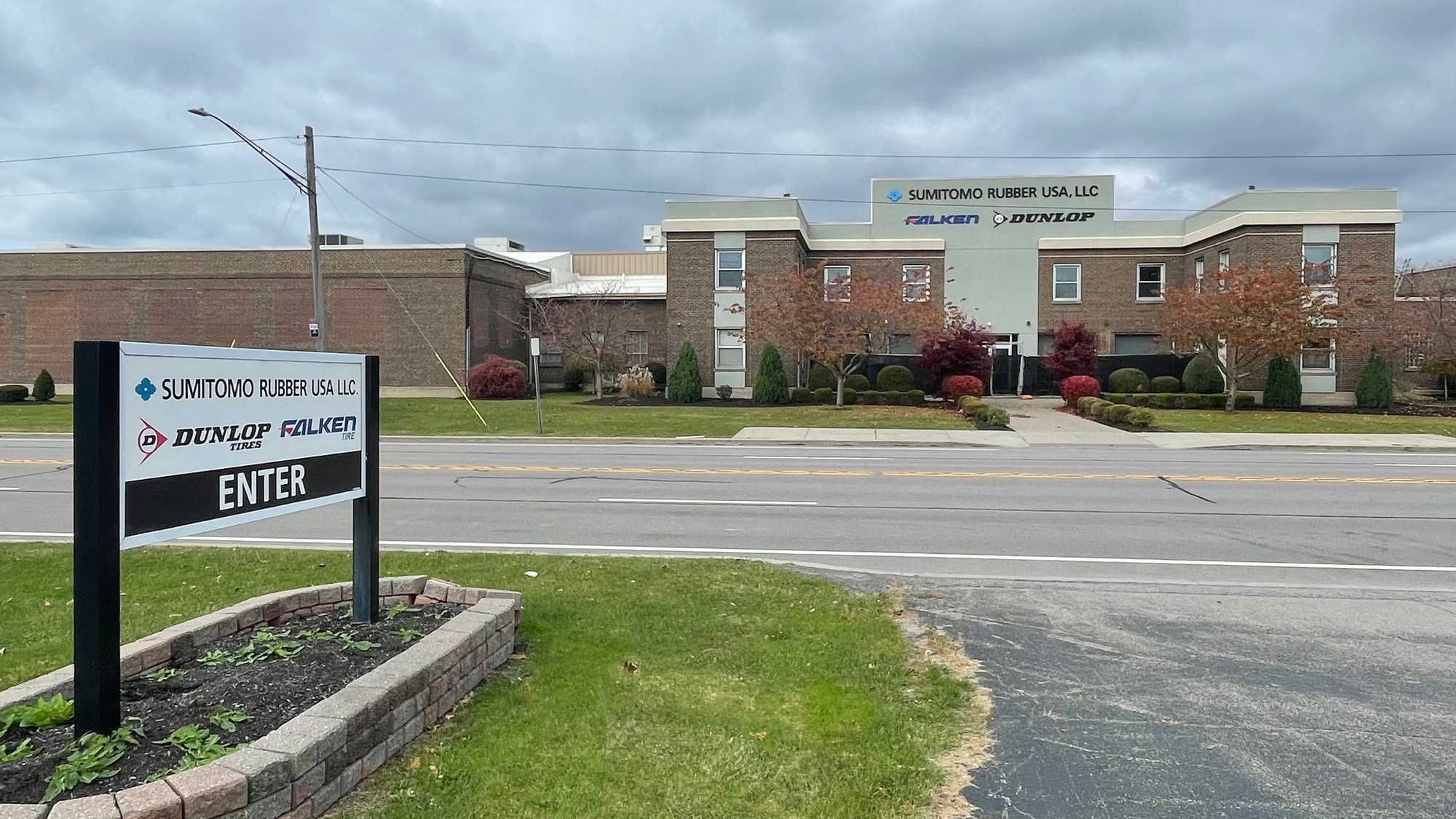
Boreanaz says efforts are underway to address the sudden closure of the Sumitomo Rubber plant with officials both at the state and federal level, given the statutes of the law.
When it comes to violating the WARN Act, Boreanaz says the penalties for Sumitomo could be significant.
"Up to $500 per-employee, per-day [in fines]," Boreanaz detailed. "Generally speaking, when these things happen along these ways, there's some bargaining that goes on between the labor unions and the employer to address potential violations of the WARN Act and/or the last days of employment, if there are going to be any last days of employment,. And it's still unclear, at this point, if it is 100% shut down, not one employee is coming in. Those details just aren't clear at this point."
Boreanaz adds the fines do involve sense of the circumstances of why the violation occurred.
"Was it willful in the sense of was there some catastrophic event that happened that required the company to close the plant down that was outside of their control? Then there may be some arguments to be made that the fines should be at the lower end of that $500 scale. If it was events or circumstances that were outside of the control of the employer that caused this, then maybe it would be less than that. But those are difficult things for employers to try and demonstrate," he said.
"I have been doing this a long time, and I've never been persuaded, frankly, that you have a company that had such an event that happened so quickly that they couldn't have planned for this in order to provide either 60 or 90 days advance notice of the closing. I believe that this company knew that this was coming, and they, perhaps willfully, did not provide the notice that they're required to provide."
When determining that the WARN Act does apply to this particular closure, Boreanaz doesn't think there will be much time spent trying to convince regulators, the state or a federal prosecution team that the WARN Act does apply.
"The next question will be, what is going to be the enforcement mechanism? Is it going to be an enforcement that is going to be negotiated, or is it going to be an enforcement that's going to be litigated? And generally speaking, we won't know the answer to that for weeks, if not a month or more," Boreanaz noted.
Boreanaz adds the jurisdiction of the WARN Act is in the site of the location of the employment. The fact that the plant is owned by a Japanese company does not matter in these circumstances.
While Boreanaz has yet to speak directly to any of the employees at Sumitomo Rubber, he knows the direct impacts will be felt not just by those working at the plant, but the community surrounding it.
"You wake up one morning, your life is as normal and routine as you could think. You grab your coffee, you're on your way to work, and for whatever you're doing, you're having a plan for the week or the weekend, and everything is shut down and your life is completely turned upside down," Boreanaz said. "You start immediately thinking about, how am I going to pay my bills? My plans or purchases that were expected, you have to change and alter. Everything comes to a screeching halt. It really takes its toll on not just the employee, but their families and also the community. The local taverns where people cash their checks, the places where people will buy things, even the locations where workers are buying safety equipment to go to work at. It's just devastating. It's irresponsible and it's shocking."