

Buffalo, NY (WBEN/AP) Three former UB basketball players are among those accused of participating in a point shaving scheme. The scheme also involved the Chinese professional league according to federal prosecutors.
An investigation into a sprawling betting scheme to rig NCAA and Chinese Basketball Association games has ensnared 26 people, including more than a dozen college basketball players who tried to fix games as recently as last season, federal prosecutors said Thursday.
The allegation names former UB players Shawn Fulcher and Isaiah Adams, who played for the team in 2023-24, and a third unnamed player.
The investigation looked at three games: the team's game at Western Michigan University on Feb. 24, 2024, a game at Kent State University on Feb. 27, 2024 and a home game against Ohio University on March 5, 2024, are named in the indictment. UB lost all three of the games in the indictment.
Federal prosecutors say Fulcher, Adams and the unnamed third player were given $54,000 for their participation in the scheme.
The scheme generally revolved around gamblers who placed bets and recruited players with the promise of a big payment in exchange for purposefully underperforming during a game, prosecutors said. Those fixers would then bet against the players' teams in those games, defrauding sportsbooks and other bettors, authorities said.
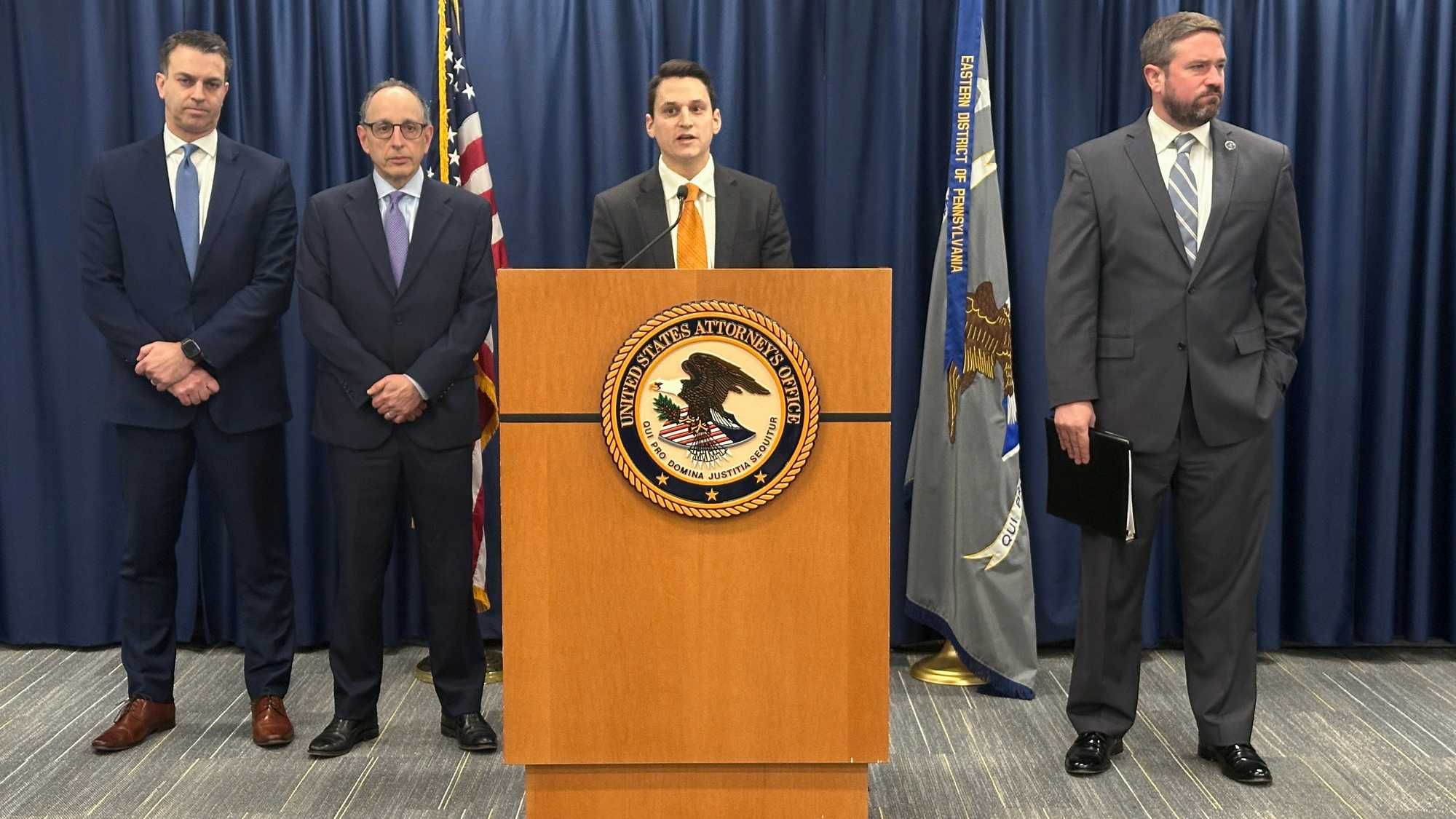
Calling it an "international criminal conspiracy," U.S. Attorney David Metcalf told reporters in Philadelphia that this case represents a "significant corruption of the integrity of sports." The indictment suggests many others, including unnamed players, had a role in the scheme but weren't charged, and Metcalf said the investigation was continuing.
The indictment is the latest gambling scandal to hit the sports world since a 2018 U.S. Supreme Court decision unleashed a meteoric rise in legal sports betting.
Canisius University's Dr. Bridget Niland says point shaving cases aren't as uncommon as you think. "With the growth of the legal sports betting market, it's become quite rampant across, really, a variety of sports, but the most money that can be made are typically in the professional sports, and then, if not in the professional sports, it's in the high revenue sports of college football and college basketball," says Niland. She says when the Supreme Court issued a ruling that allowed the regulation of sports betting in particular to rest with the states, "you're ultimately going to have kind of those unsavory individuals trying to figure out how to fix it their way. And you have very vulnerable student athletes that can often get caught up in their schemes."
Despite Name Image Likeness agreements for college athletes, those suspected of being involved are not young men playing at very large name, recognizable institutions. "Most of these young men were at schools that really are mid to low-major or low competitive, what we call schools that we know do not have as much money to give out with NIL, so those players in particular are far more vulnerable than what you would say maybe at a Duke or North Carolina or in Alabama, where there is a lot of NIL money being exchanged between athletic departments and businesses and student athletes," explains Niland. She says for many of these athletes, if they are still playing basketball after their college career, they're overseas, they're not reaping the money and the benefits of the awards some fans might think they would be.
Niland says technology is helping detect point shaving and other event rigging. "There's this integrity management software that kind of pairs with the amount of bets that are being tracked, and you can see upticks in certain games that you're kind of wondering, why exactly, is there so much money trading hands in a game involving, Towson State, for example," says Niland. She says in one instance, there was almost $450,000 being bet on a particular statistics within that game. "It is unfortunate, though, that it is catching individuals who I say I think are the most vulnerable, certainly doesn't make what they did right, but it's certainly a little bit more understandable when you dive deep into some of the context of how this happened," says Niland.
Niland says the NCAA did put regulations in place to have education around this. "But like everything in our world these days, the technology, the ability, a lot of the unsavory characters allegedly involved in this indictment is two very well known sports betting influencers, the ability and the technology around this, they'll often convince the young people that what they're doing won't be detected by this integrity management software, or won't be tracked, because maybe it is a mid to low major game," explains Niland. She notes schools have to really work with student athletes and convince them, it's going to be wrong, they'll have to pay the price. "Some of the sadness to come out of this is when you look at some of the individuals involved, these are individuals like 18 to 22 or 18 to 23 year old, this dramatically going to change the trajectory of their lives if found guilty of these, of these allegations, and in how much education is taking place for them to truly realize there's another concept," she adds.
Niland notes the research also shows that some of the young people actually don't identify prop bets as necessarily sports betting or gambling, because they're not betting on the outcome. "They're not betting against their teams. It's rationalization, but again, we're talking about a group of young people that are somewhat vulnerable because of where they are in their kind of seeking a career through sports or an education through sports, and trying to find the way to fund both," says Niland.
Those convicted could face 20 years behind bars.