


Cheektowaga, N.Y. (WBEN) - Much work has been done over the years in Western New York and across the nation to properly identify, address and remove the presence of lead water pipes or lead in water systems in several communities.
The Buffalo Water Authority (BWA) and Erie County Water Authority (ECWA) have both been active locally to replace aging infrastructure and water pipes that may be galvanized or contain lead. This includes programs like the ECWA's "Get the Lead Out" initiative and the BWA's "Replacing Our Lead Lines" program, with help from federal funds used to remove lead from Western New York's water.
The dangers of lead in water systems are not seen, and also can't be tasted in drinking water.
"The problem is there are really no obvious signs. You drink the water, it tastes just like any other water. So you really can't tell from looking for signs," Erie County Water Authority chairman Jerry Schad. "You can't tell in color, you can't tell in aromas, or anything like that. So the only way, effectively, is to get the water actually tested. And that we can do. Just call your local water supplier - whether it's us, Buffalo or some other city or a water system - and they'll test the water for you."
If you happen to get your water pipes tested for the presence of lead and the test comes back positive, crews will find out where the lead service lines are and if it is within the homeowner's building and it's part of their system, they have to deal with it. Under a new federal mandate, though, officials will have to do everything up to the house.
Domenic Cortese from "Hammertime Radio" on WBEN says if tests come back positive for lead in your pipes, the last thing to do is panic.
"If your structure is older, there's a likelihood that lead has existed in your water content for some time. And the truth is when water runs through a lead pipe, it does eventually clear out, where it's safe enough to consume," said Cortese in an interview with WBEN. "Having said that, it is important to deal with the lead pipe issue and get it replaced. So there's a lot of steps you can take to check whether the municipality you live in is supporting any lead pipe water replacement. I would start with that as being the first line of defense to protect your family from lead."
Schad says filtration systems can help and can be effective to help regulate the lead in the water system, but Cortese says don't rely on long-term.
"While a water filtration system may perfect the ability to clean out contaminations from lead, I would not recommend that being something you would rely on. I would recommend that if you do have lead pipes, they'd be dealt with in a wholesale fashion and that they be removed," he said.
Officials have gotten good at determining whether or not the issue is a service line in one's house, or if it's something that is on the local municipality to take care of.
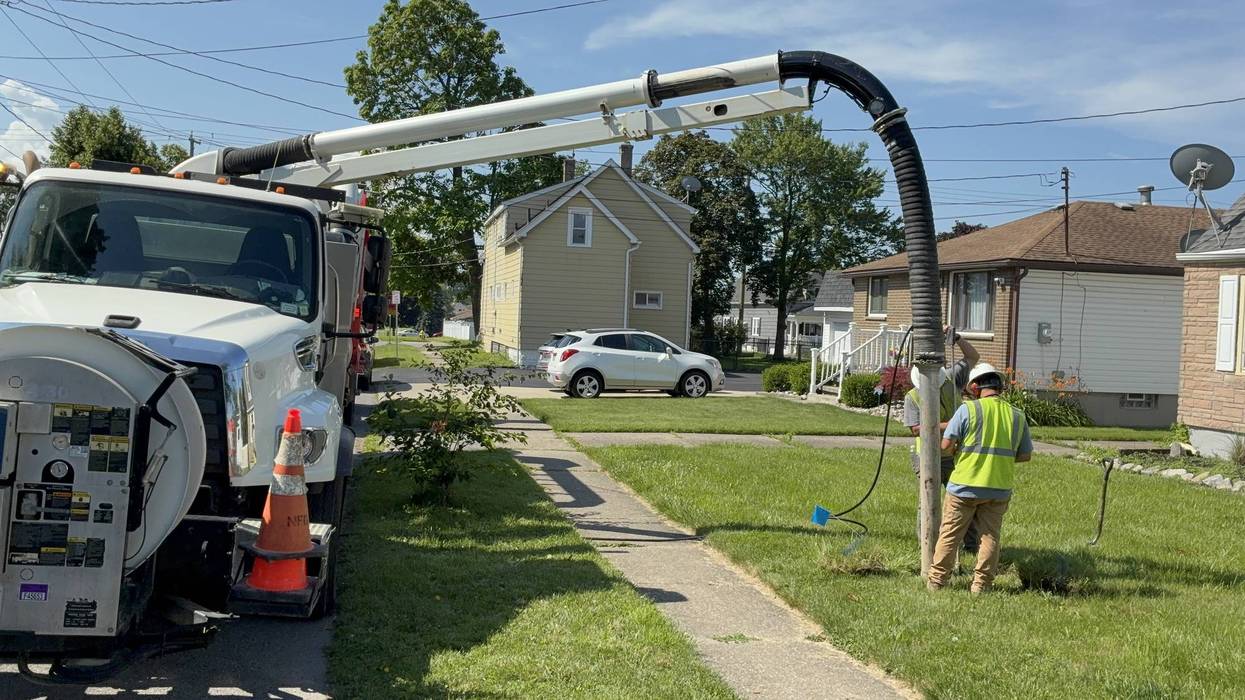
"You can tell by the material, it's obvious once you dig in," Schad said. "Here, we found copper on both sides, because it's obviously a copper line. If it's unclear, we do some more digging, but you can tell with certainty once you dig down enough, you could see the actual connection. And if you have to, you go down and scrape it and know for sure."
Cortese says lead conducts itself into one's home from the water main, where there would be a line that would cross down the street servicing all the neighbors, then there'd be a lateral that would come off from the main and would tie your house into that main.
"And then there would be the lines within your house that would feed water to all of your plumbing fixtures. There could be lead in any one of those steps, including the main, the lateral, or feeding the fixtures within your house," Cortese explained. "It's important you know that and know where that lead is, so that you can properly assess a replacement."
If you end up needing to replace your water pipes in your home, Cortese recommends checking with your local municipality to see if there is any aid that's available, based on the existence of lead pipes.
"It could be that your town may be supporting this replacement, and it might help defray some of the costs," Cortese said.
According to Schad, the assistance residents have right now is under the Lead and Copper Rule.
"Tell your local water system, because they are obligated to do something all the way up to the connection inside the house. That is actually a program that is taking a burden off of homeowners between the curb stop, where our water supply ends, and the home," he explained. "Normally that's a homeowner's responsibility, but under the Lead and Copper Rule, it's our responsibility too."
More information about testing for lead in Erie County can be found on the Water Authority's website: