


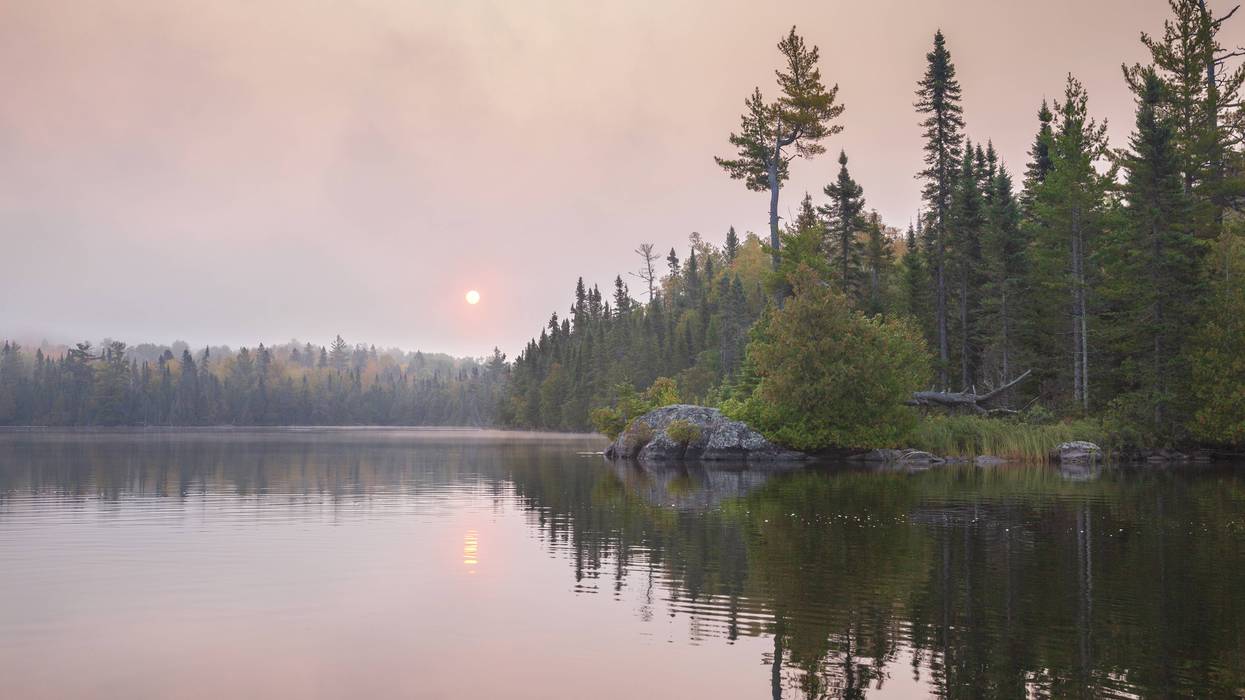

Wildfires. Excessive heat warnings. Air Quality Alerts. Flood warnings. Drought. There's a reason behind Minnesota's latest extreme weather and air quality rollercoaster.
"The scientific term for our weather is bonkers."
That actually not-so-scientific terminology from University of St. Thomas climate scientist Dr. John Abraham says it well. Climate change is driving all of these weather extremes, not that there wouldn't be fires, or rain, or heat. He just says what we're experiencing is becoming more extreme.
"And if you think it's hot in the U.S., you miss the heat wave in Europe," Abraham explains. "I mean, it's not just something that's hitting Minnesota or the U.S. It's actually affecting us all around the world, and Europe is just one other example. Weather is becoming more wild and more severe as the Earth warms, and what that means is it's going from one extreme to the other more rapidly. And more viciously."
Abraham also says what we've experienced in recent years is only going to speed up.
"The bad news is the climate is like a freight train going down the track," he adds. "It's really heavy, and it's going really fast, and it takes a while for our actions to actually change the speed or the trajectory of that train."
Adding to the extreme in 2026 is what is shaping up to be an historically strong El Nino, the warming of waters in the equatorial Pacific Ocean that affects weather all across the planet.
However, Abraham says there is a ray of optimism.
"In the past it was a badge of moral fortitude to use solar panels and wind power," Abraham said. "But now, it's a marker of fiscal responsibility and conservatism. We have reached a tipping point where we can power our homes, our cars, and our places of work more cheaply with clean energy than with dirty fuel."
Abraham says making a difference will involve a sustained approach of reducing emissions, and while he says it may take decades, we'll be able to bend the curve of climate change.
"So, if we really want to make a difference, we have to have a sustained approach of reducing our pollution emission, and over time," Abraham adds. "This is going to be years and decades. We can bend the curve of climate change. But for anyone looking for a panacea that we can fix this by tomorrow or even by next year, such a panacea just doesn't exist. It's going to take a long term effort."
"The scientific term for our weather is bonkers," says University of St. Thomas climate scientist Dr. John Abraham
"The scientific term for our weather is bonkers," says University of St. Thomas climate scientist Dr. John Abraham