


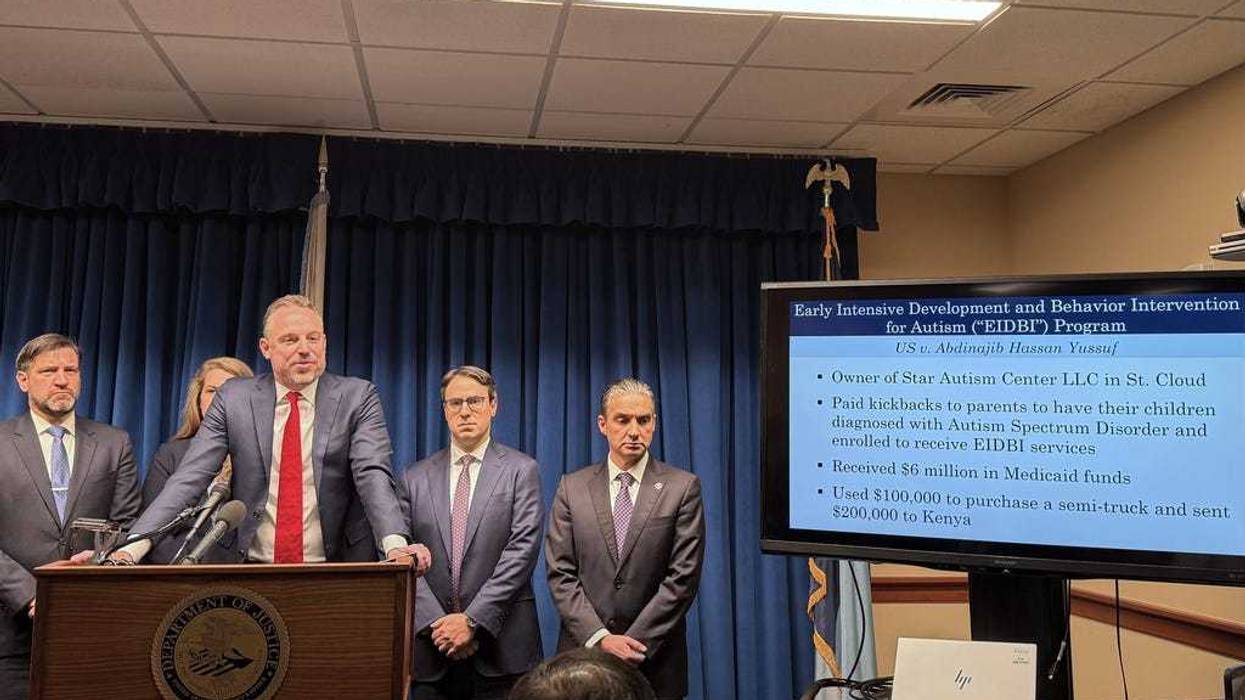

The chairman of a U.S. House Committee announcing he is expanding the federal investigation into fraud within Minnesota social services programs.
It follows the announcement from the U.S. Attorney's Office last week that the total fraud in 14 of Minnesota's Medicaid programs could be as much as $9 billion, a figure disputed by Governor Tim Walz and other state leaders.
Among other state and federal agencies, House Committee on Oversight and Government Reform Chairman James Comer (R-KY) is requesting information from the Treasury Department on so-called 'suspicious activity reports' related to the Riverside Plaza Apartments and Karmel Mall in Minneapolis.
Comer is also requesting information from the Department of Justice and transcribed interviews with state officials.
That is happening the same day as we get more pushback against federal prosecutors' claims that they uncovered billions of dollars worth of fraud in the state.
"Nothing I've seen indicates the $1 billion of fraud or the $9 billion of fraud figures that have been cited," says James Clark who is inspector general of the Minnesota Department of Human Services.
Clark says that doesn't mean there isn't fraud happening in Minnesota - it's just not at the level federal investigators are claiming.
"I've seen in the less than a year I've been here tens of millions of dollars of fraud right in our programs," says Clark. "So, I think if we extrapolate, I could see potentially there being hundreds of millions of dollars of fraud in our programs if you stretch that out through several years."
Clark added he's concerned about how quickly 14 Medicaid programs in Minnesota are growing, and says there needs to be better vetting what he called unserious businesses and people trying to access the programs.
Clark adds the department has what he called a 'vetting issue.'
"We need to do a much better job of vetting unserious people and businesses before they gain access to our programs," explains Clark. "And we need enhanced business technology solutions on the back end to better monitor people and businesses once they do gain access to our programs."
Clark says they've started using enhanced data analytics since he began his job in March, which has led to such things as suspending payments to providers.