

A warning to shoppers about being aware of scams headed into the holidays.
Scammers are turning to Artificial Intelligence which raises concerns during the busy holiday shopping season.
"They can impersonate trusted businesses, financial institutions, government entities, delivery companies, you name it, even family members," says Sara Payne, Assistant Commissioner of Enforcement at the Minnesota Department of Commerce.
U.S. consumers spent $257.8 billion online from November 1 to December 31 last year, giving those scammers a target-rich environment. Payne says it is best to know who you are buying things from.
"Research on familiar retailers. Check the website address carefully to make sure it is the address that it purports to be. Do not click on an unsolicited link in a text message," she explains.
Payne says simply slowing down can keep your holiday season merry and bright.
"Scammers want you to react emotionally," she adds. "They want you to make a quick decision before you really have time to question what's happening."
There are some red flags to lookout for if you're planning to do any charitable giving this holiday season as well.
"In all of the work that we have done, I am not aware of a charity that is soliciting donations through cryptocurrency, gift cards, or some of these more obscure payment platforms," Payne said.
In August, Minnesota banned cryptocurrency kiosks. Payne says there have not been any reported scams involving those kiosks since then.
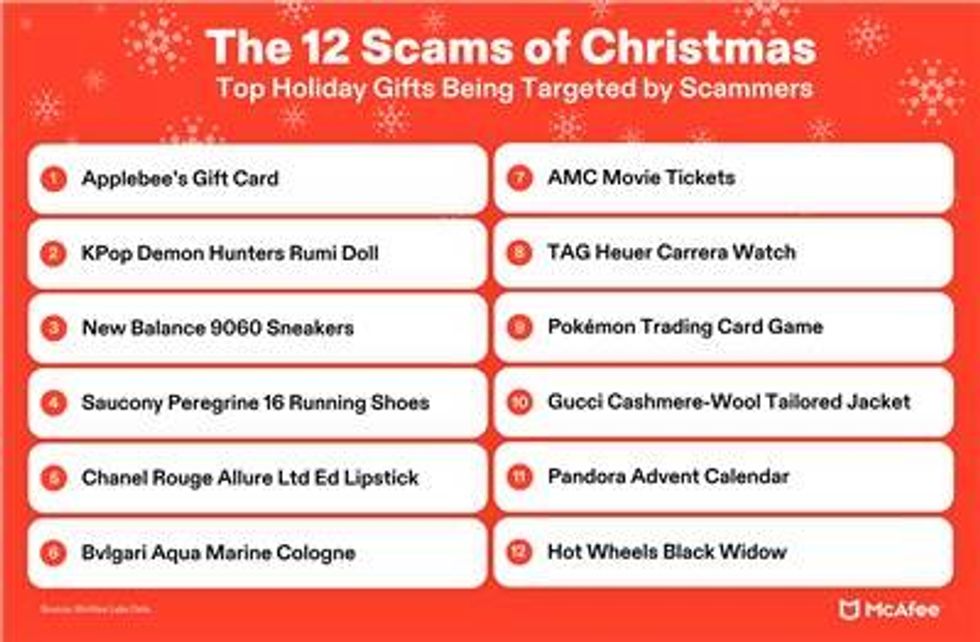
The Department of Justice also announced a surge in resources to crack down on online scams this week.
The Secret Service is also alerting holiday shoppers about fraudulent shopping websites. Online scams have surged over the past few years.
"It's pretty unavoidable, unfortunately," says Ben Winters, Director of AI and Privacy at the Consumer Federation of America. "People are experiencing it every day, and the losses we're seeing reported have just gone up and up year after year. So depending on, you know, exactly the type of scam, it really varies. But impersonation scams, fake shopping website scams, romance scams, we are seeing all of it. And people are losing a lot of hard-earned money."
Winters also says the use of generative AI tools allows people to make websites, text messages, videos and calls that can seem very realistic.
"So, it creates an extra layer of vigilance that consumers need to have," he explains. "And, you know, it's why we think consumers should not be responsible for it. But unfortunately, right now, there has not been enough action by the government, so consumers are having to take that vigilance."
From fictitious shopping sites to non-existent part-time jobs, criminals have figured out how to capitalize on your spirit of giving. Among the most insidious are the scammers posing as charities and soliciting your donation. Consumer advocates urge caution when being pressured to give to an unfamiliar organization.