



Eighty Percent.
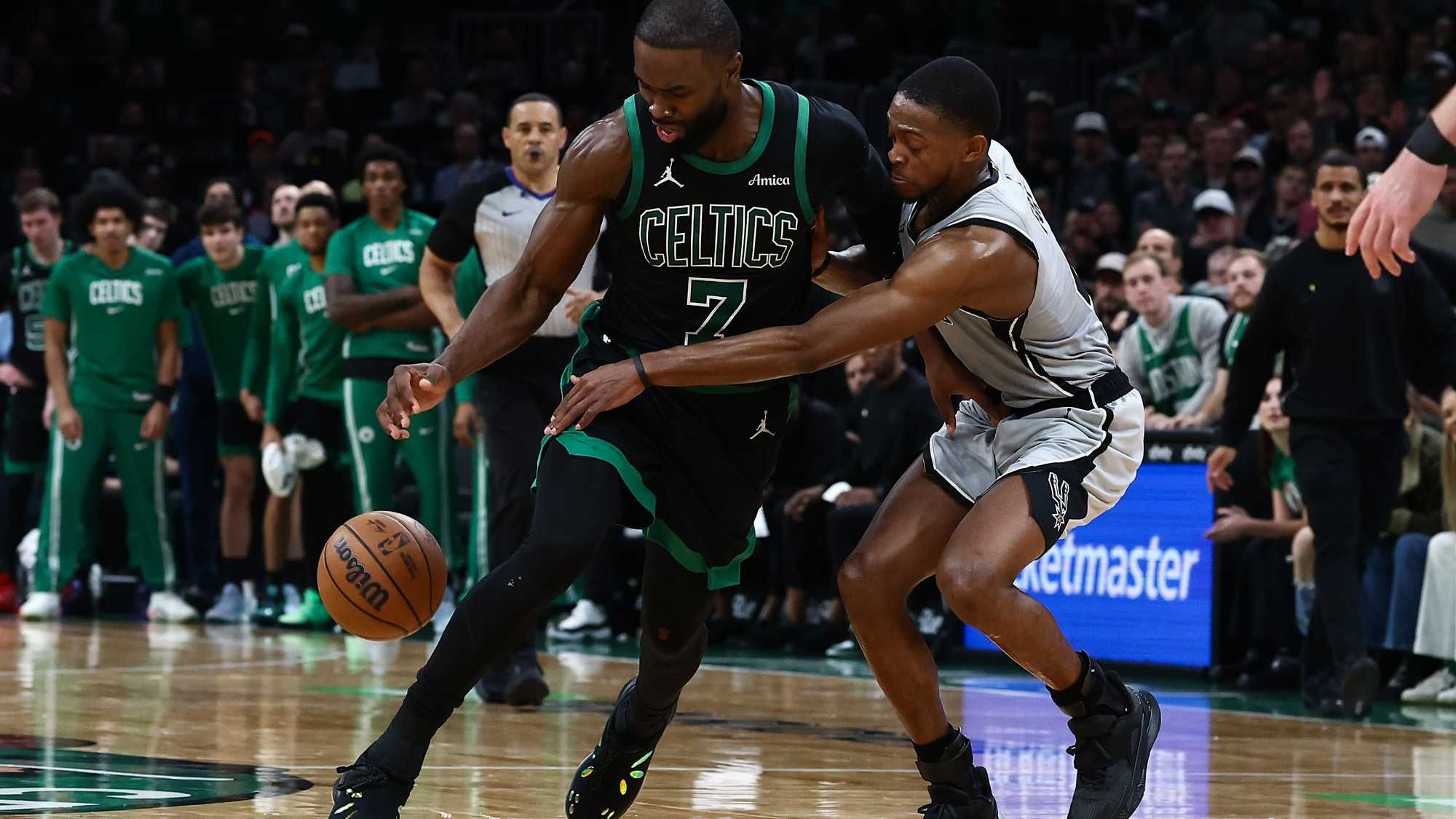
Monday night's 98–96 loss to the Indiana Pacers dropped the Celtics to 8-12 in "clutch" games (defined as games within five points with under five minutes remaining). Those 12 losses account for 80 percent of Boston's 15 defeats this season, including each of their last four. Seven of the 15 losses have been decided by two possessions or fewer, four of them by a single possession.
You can attempt to spin that as a positive, especially Monday's game, as the Celtics were without Jaylen Brown (back spasms). Boston has been in just about every game, and Jayson Tatum should go a long way toward shoring up their late-game issues. Still, the ability to execute down the stretch is a hallmark of truly great teams, and it's something the Celtics haven't been able to do consistently.
That inconsistency shows up most clearly on the defensive end. Boston has been a middle-of-the-pack defense overall this season, ranking 15th with a defensive rating of 114.3. In the clutch, however, the Celtics have been one of the league's worst, posting a 123.6 defensive rating — the third-worst mark in the NBA. In other words, Boston's defense has been 9.3 points per 100 possessions worse in the clutch.
Much of that has to come down to rebounding. The Celtics have been outrebounded 43-57 (-14) in their 45 clutch minutes this season, including 19-9 on the offensive glass. Opponents have posted a ridiculous offensive rebounding percentage of 41.0. That has translated to 38 second-chance points, which are the most allowed by any team in the clutch this season.
But it isn't only the defense. The Celtics' offense, which ranks second in the NBA with a 121.4 offensive rating, falls to 15th in clutch situations (110.4), a drop of 11 points. That dip comes despite elite shooting numbers late: fourth in field-goal percentage (48.4 percent), third in three-point percentage (41.5 percent), and fifth in effective field-goal percentage (57.7 percent).
Turnovers are a major culprit. Overall, Boston is one of the league's best teams at protecting the ball, posting a 12.4 turnover percentage — the second-best mark in the NBA, narrowly trailing Oklahoma City's 12.0. In the clutch, though, that number balloons to 15.6 percent, a 3.2-point spike and the third-worst mark in the league. Compounding the issue, Boston's offensive rebounding also falls off late, dropping from seventh overall (33.3 percent) to 29th in the clutch (23.6 percent).
Put it all together: the Celtics are being outshot 101-91 from the field, 64-49 from the free-throw line, getting outrebounded, and losing the turnover margin. It all adds up to losing basketball, reflected in a -12.7 net rating in the clutch, a stark swing from their +7.1 overall rating, which is third-best in the NBA.
Joe Mazzulla has stressed the importance of margins since arriving in Boston. In clutch games, those margins matter even more. And that's exactly where the Celtics have faltered. They've been in plenty of winnable games, only to lose in areas they can control, a problem they must fix moving forward.