


DETROIT (WWJ) -- A bold plan, or just preposterous?
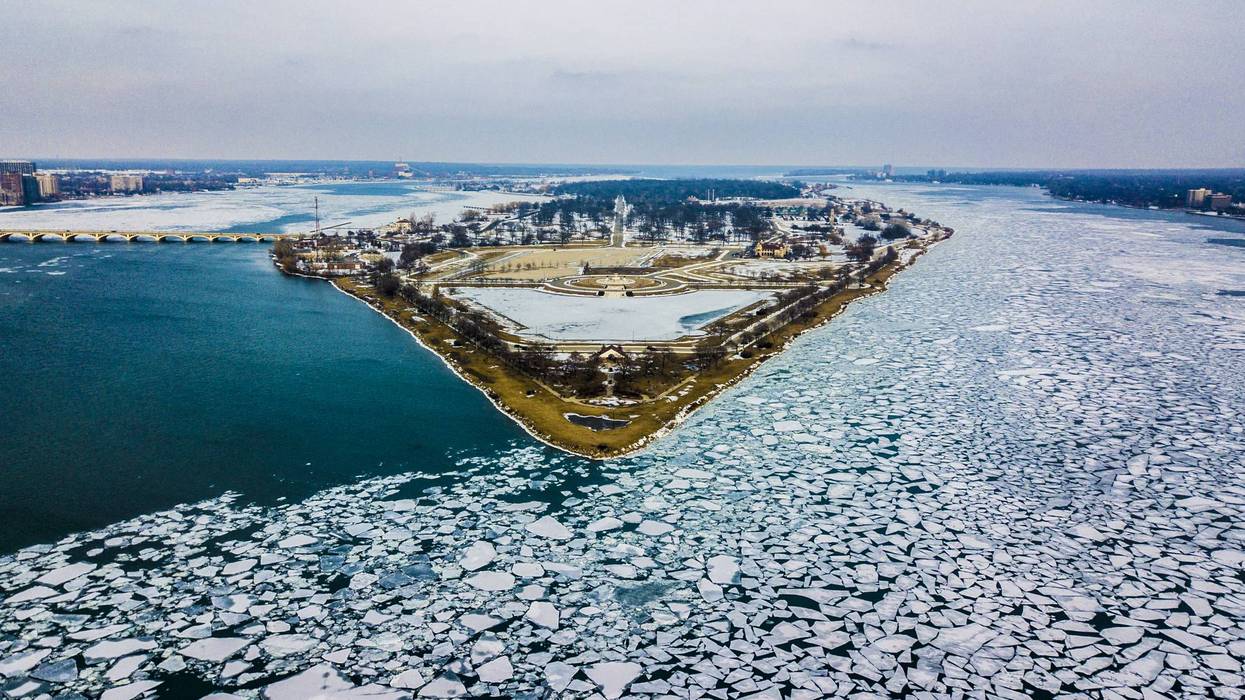
Real estate developer Rod Lockwood wants to buy Detroit's Belle Isle for $1 billion and turn it into a "special economic zone" for the ultra-wealthy — with high-income housing, mixed use developments, and more than 100 restaurants.
Speaking live on WWJ Newsradio 950 on Monday, Lockwood said the purpose of this development would be to reignite Detroit's economy, and bring the city back to its heyday.
"We are now the country's poorest major city, so we need to do something different," Lockwood said. "And we're fortunate to have this opportunity, this island in the middle of an international river that's uninhabited. It's owned by a single owner, so...you don't have the land assembly issues you might have otherwise.
"And to install a special economic zone with relief from some of the rules, at both the federal, state, and local level, which are a hindrance to bringing it back. And so, it would be a community — once built out — of 50,000 residents...And as you mentioned...many restaurants, and retail office, hotel, medical center, all kinds of things."
Could this ever actually happen?
While the idea has been getting a lot of reaction from people in Detroit and the region, the Michigan Department of Natural Resources, which manages the island, said it is not even being considered.
Asked about that, Lockwood didn't seem too fussed.
Although, he did acknowledge that there are some people he'd have to convince.
"The heavy lifting is gonna have to be done in Washington DC, and in Detroit. So, we've been spending a lot of time in DC, briefing legislators there on the concept, and how it could benefit Detroit but also replicate in other areas of the country," Lockwood told WWJ's Tracey McCaskill. "In Detroit, we have just started the process of briefing local leaders "
"As you know, the announcement just came out, what? Two days ago, two or three days ago," Lockwood said. "So it's early, but we need to build support for the Belle Isle SEZ (special economic zone) in Detroit right now.
"And we're doing that by talking about the job creation: the 200,000 job years of construction, and the 46,000 permanent jobs, once Belle Isle is built out, the economic effects and the spillover into across the river."
 Newly renovated Belle Isle Aquarium to reopen to public July 16Getty Images
Speaking to WWJ's Luke Sloan, Detroit City Councilmember Mary Waters said the idea gets a hard from her. And she feels many other Detroiters would concur.
"We're everyday Americans here in Detroit," Waters said. "And so we don't want Belle Isle to become the Mar-a-Lago for the filthy rich; that's what we don't want. See, people here need a touch of nature. We're tired of seeing a whole bunch of concrete."
A poll released by Mitchell Research showed 42% in support of Lockwood's idea, 37% opposed and 20% undecided.
Critics of the poll, however — including Waters — say it was designed to skew toward approval, and left out some important details.
This isn't really a new idea
If Lockwood's plan sounds familiar, that's because he floated a similar one more than a decade ago.
In 2013, Lockwood (for the same $1 billion purchase price) said he wanted to turn Belle Isle into a tax-free commonwealth — a private city-state with it's own laws, and a focus on free market capitalism and limited government.
Despite that Detroit was working through bankruptcy at the time, Lockwood's idea was dismissed back then as radical and unhinged.
If you'd like to learn more about Lockwood's ideas you're in luck, because he wrote a book about it.
Lockwood's self-published "Belle Isle: Detroit's Game Changer" is a fictional story, set in a future in which his plan has come fully to fruition.
The situation with Belle Isle at it stands
It's unclear if it would even be possible for Lockwood (or anyone) to buy the island, even if Detroit were interested in selling.
Belle Isle officially became Michigan’s 102nd state park on February 10, 2014. The park is currently managed by the Michigan Department of Natural Resources (DNR) under a 30-year lease agreement with the City of Detroit, which retains ownership of the land itself.
The initial 30-year lease isn't set to expire until February 10, 2044. At that point, the lease includes two 15-year renewal options that will happen automatically unless either Detroit or the State of Michigan opt cancel at least one year before the current term ends.