


The New Orleans Saints want to have their bases covered in the NFL draft, and that's true even when it comes to players who should be long off the board when the Saints select at No. 14 overall.
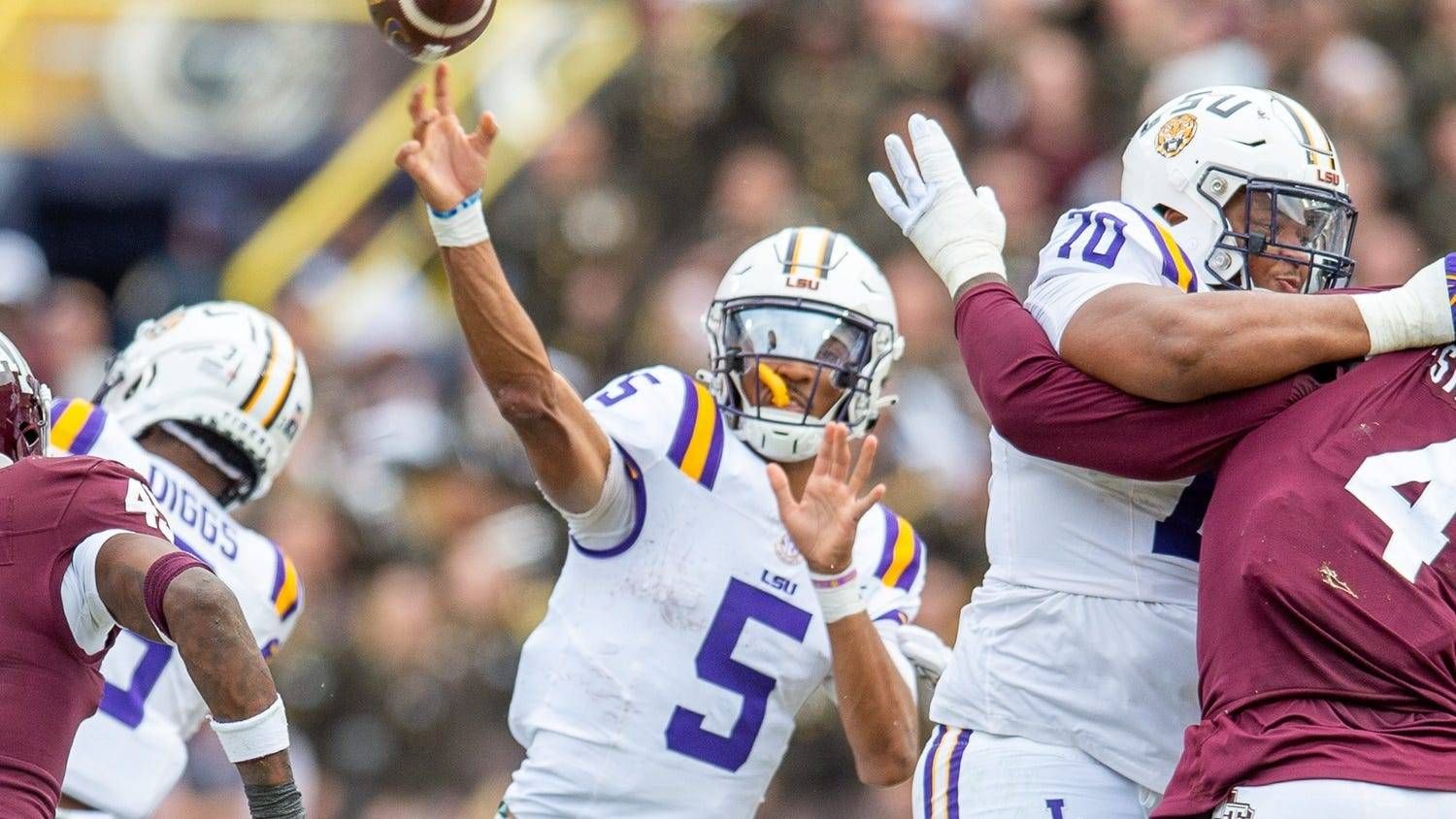
That philosophy is represented nowhere more clearly than the decision to sit down with LSU star and Heisman winner Jayden Daniels at this week's NFL Scouting Combine. Saints assistant GM and scouting director Jeff Ireland offered insight into why that meeting took place when he spoke to the media on Wednesday.
"The draft is an inexact science, and you can’t say ‘he’ll be gone,’ you know? You never know," Ireland said. "We have to be prepared for everything."
The meeting with Daniels is one of dozens that will occur between Saints brass and prospects throughout the week in Indianapolis. The team had a busy schedule of meetings on Tuesday and Wednesday as they look to get a better picture of the field, and in many cases a chance to peek beyond the surface level and tape for the first time. While Ireland wouldn't exactly give away his strategy regardless, his answers did seem to indicate the interview with Daniels was more about due diligence than preparing for a blockbuster move up the board, which they'd likely have to do to have a shot at the former Tiger.
Daniels has been a popular pick for the Patriots at No. 3, and even if he fell past that pick, it's unlikely he'd fall far.
"I’ve been in drafts where players have slipped. I don’t think he’s going to, but I’ve been in drafts where maybe we’ve taken the things for granted that he’s going to be gone and you get to it and he’s still sitting there for us, and maybe our scouting staff didn’t do our homework at that time, on that player, and that’s a dangerous game to play," Ireland continued. "So we’re going to do our homework on every single player, and that was the case with Jayden and we had a great interview with him. He’s a great kid, very impressed with him.”
Another factor in these interviews is building what Ireland referred to as a "historical document" for players. Even if they land elsewhere, there's a chance they could come up as a free agent possibility down the road. The information collected during this phase could prove invaluable at that point, with other teams maybe not being the most reliable source for insight as they protect their own interests on the open market.
“It’s our job to get the information ourselves. It’s not our job to listen to rumors and innuendos and, you know, social media stuff," Ireland said. "It’s our job to make sure that we have the answers that we have to all the questions that we get and make our own decisions on that information. So is there smokescreening out there? Sure. But it’s our job to understand exactly what we need to do to make an educated decision."
━━
MORE FROM JEFF IRELAND
On some top players skipping drills at combine
“It’s tough. Look, I feel like the player’s job is to answer all of our questions. My job is to try to build conviction to draft the player, and so when a player doesn’t interview or doesn’t do a medical or doesn’t do a workout, those are questions that we have, and when I’ve got questions on a player that doesn’t do this, that or the other, then I’m probably going to pass on that player and go with the player that has answered all those questions, because I’ve got conviction. It’s no different than any of you guys making a decision, you’re going to make a decision based on as educated, as convicted as you can on the information that you have, and so when a player doesn’t work out, I mean, I feel like it hurts our ability to build that strong conviction to make a really sound decision. So I’m usually chasing that information until the last weekend we can get out, and hopefully, you know, hopefully that’s not a trend, but it seems to be quite frequent that we do it and at the end of the day, most of the time, we get them to do the drill, it’s just sometimes it’s on their timeframe, not on ours.”
━━
On working with new OC Klint Kubiak
“It’s what we did for an hour after our last interview, Klint and I just sat in a room and talked about philosophy and those emphasis things that he’s looking for. We talked about players. We talked about makeup, just spending time with him and understanding what he’s looking for and how I go about making decisions and my thought processes and trying to get him as much information that he can — that I can for him to help me make these decisions, and we’re very collaborative and I’ll listen to coaches, I listen to my scouts. We filter through all of the information that we can and, you know, it doesn’t really matter if it’s Pete Carmichael or Klint, I’m gonna listen to them and we’re gonna try to get them what they’re looking for and emphasize the details that they’re looking for in players. But I think it’s gonna take a little time to get exactly what we’re all looking for, but the more time we spend together, the more time we spend in meetings and they can articulate the things that they’re looking for, the better scouts we’re gonna be in making those decisions.”
━━
How has your scouting process evolved over the past decade?
“You try to get better everuy year. You try to learn from the draft. There’s trends. There’s different things that change. We’re constantly updating our prototypes. We’re constantly updating our thresholds. We’re trying to understand where you find players, where you can get an expensive player, in terms of resources, to the draft and free agency. But the process of cutting down the board and the makeup that we’re looking for, the demeanor and the toughness, all those things, they stay the same for the most part. You just have to keep learning, because the game is changing. We can only really — we have to change along with college, because college is giving us our farm network. And so if they’re not giving us fullbacks, they’re not giving us Y tight ends and they’re not giving us three-down running backs, we have to change with that, and we have. They’re giving us more athletic quarterbacks, we have to change with that. We’re getting less pocket passers, so we have to change our mindset and how we have to utilize those players. And so that’s how I’ve evolved, or at least I’ve tried to evolve.”


