

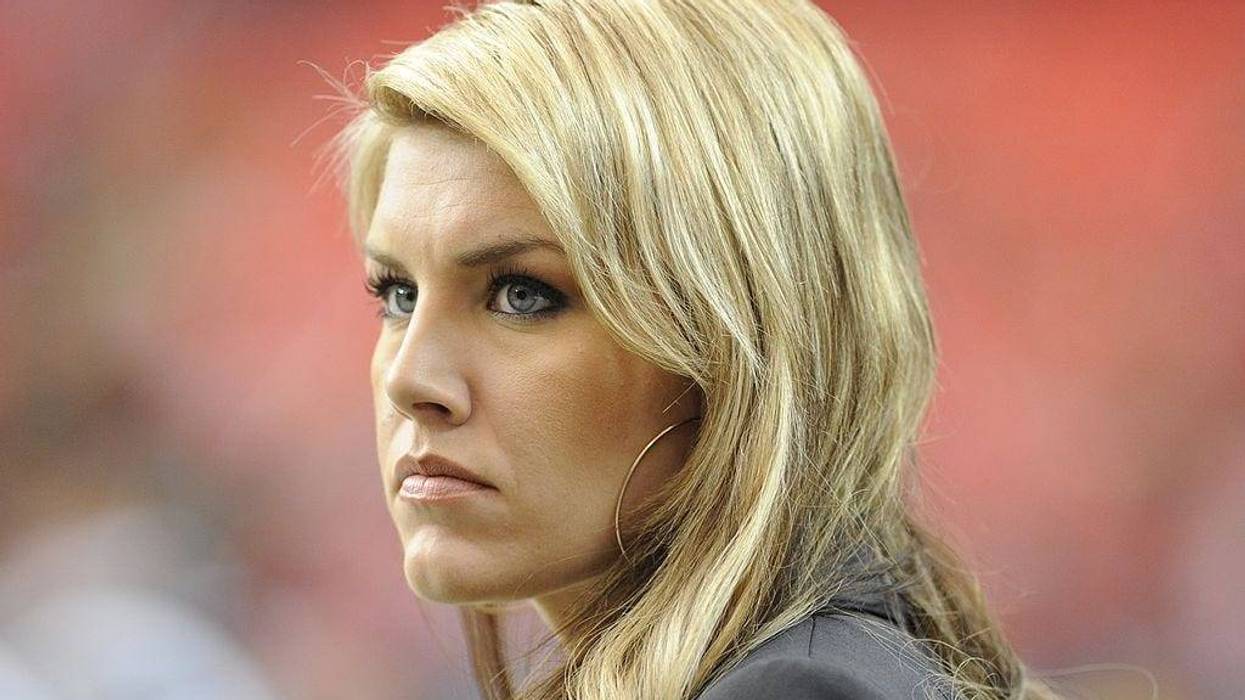

Thursday Night Football host Charissa Thompson said she would make up quotes and comments from coaches when she was a sideline reporter. Thompson made the comment while appearing on an episode of the Pardon My Take podcast.
Thompson said, "You prep all week long. You have all these calls with players. You have all these calls with coaches. You have all this for 15-20 seconds; and then half the time, it's not even on camera. It's just a report." Then Thompson admitted "I would make up the reports sometimes because the coach wouldn't come out at halftime, or it was too late and I was like, 'I didn't wanna screw up the report,' so I was like, 'I'm just gonna make this up.'" The justification for fabricating the reports was that coaches give so many generic responses that it didn't matter if she made up the quotes. She said, "No coach is gonna get mad" if I make up the comments and that making up quotes and comments was harmless.
What Charissa Thompson did was deplorable and it broke the most fundamental rule of journalism - she made up content that was not true - she lied! Technically, I am not a journalist, but I am a talk show host that acts like a journalist in terms of honesty and integrity. Over the years of my career, I have witnessed talk show hosts fabricating the truth and actually making things up and misrepresenting who they are. I always found that to be appalling and yet, hosts would hide behind the microphone knowing that listeners could not verify what they were saying so with a sense of immunity the hosts lied.
Through the years, I have also been shocked at the number of radio and TV on-air talent that have zero understanding of the industry they are part of and show no interest in actually learning about communication theory and the relationship between media and society (the audience). When I read about Charissa Thompson's admission that she made up quotes I really wasn't surprised and realized it was just another reminder that too many people in the media are in the business to be famous - to get recognized - and have no interest in doing the work it takes to understand the media.
I guess I'm trying to say that Charissa Thompson represents that segment of the media that is motivated by celebrity status rather than integrity.
The backlash from well-respected sports journalists was immediate and fierce. Veteran sports journalist Tracy Wolfson from CBS Sports said, "This is absolutely not OK, not the norm and upsetting on so many levels." ESPN sports journalist Lisa Salters posted, "Trust and credibility. They mean everything to a journalist. To violate either one - in many ways - not only makes a mockery of the profession, but is a disservice to players, coaches, and most importantly, to fans."
In the wake of the harsh criticism, Thompson now says, "I have never lied about anything or been unethical during my time as a sports broadcaster." Yet, in her own words during the podcast, Thompson explicitly explained that she did make up quotes from coaches.
Forgiveness should be based on sincere contrition. Charissa Thompson is using word salad in an attempt to take back a wrong she admitted to, and the public should not be so quick to accept the works of a known liar.
There is no room in the media for Charissa Thompson, unless she owns her mistake and demonstrates that she only cares about getting attention from being on TV.
"I got caught admitting that I made up quotes because I was frustrated that my dyed blonde hair and trophy-wife figure didn't get more attention on TV." That's a made-up quote from Charissa Thompson!