


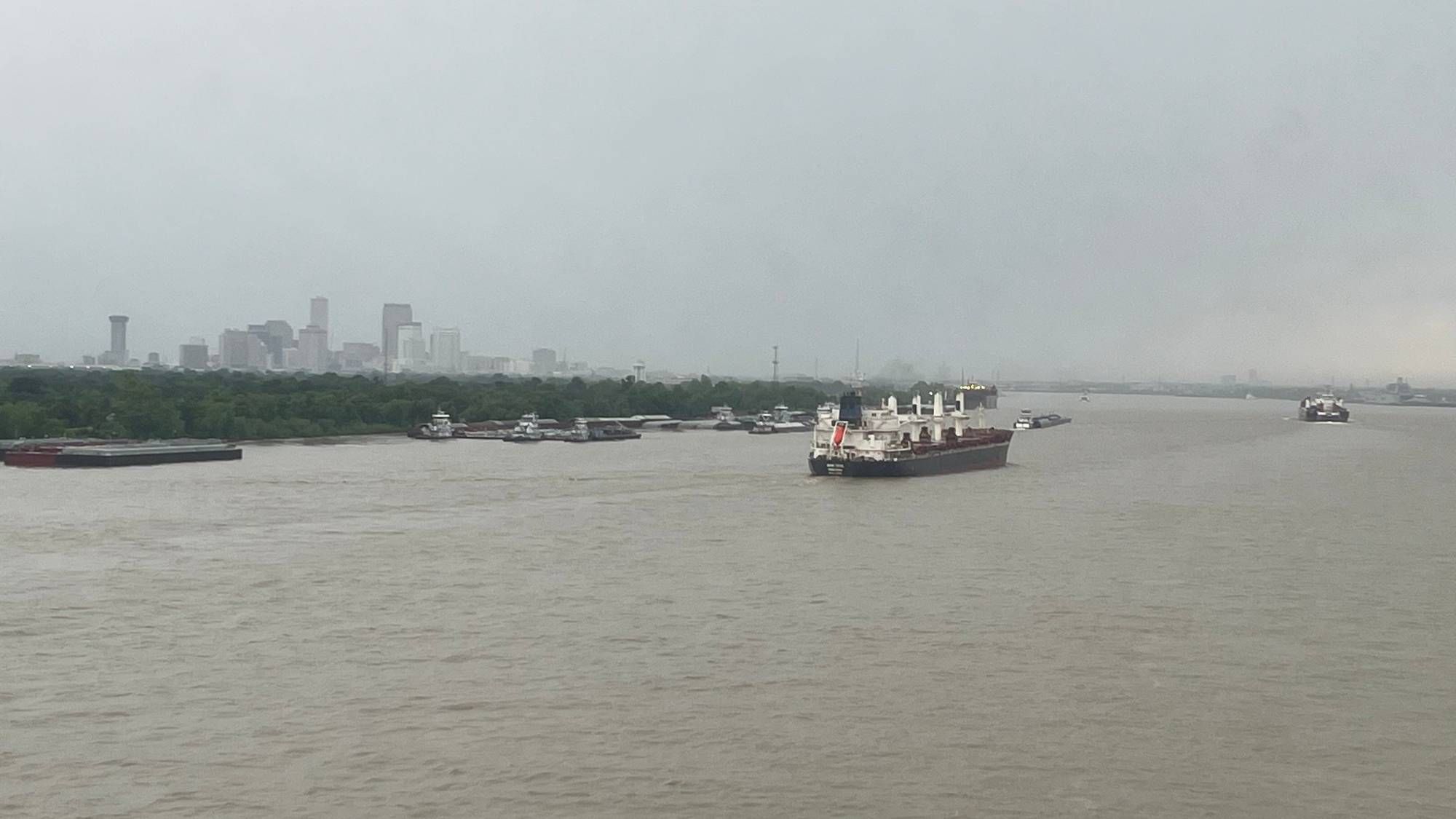
So, what will it take to get us out of this situation with the low Mississippi River? Rain, and lots of it. Also, that rain does us no good if it falls here.
The low water and reduced water flow in the river has allowed saltwater in the Gulf of Mexico to push further up the river than we usually see.
We need the rain as much as anyone, but rain here isn't really what fills up the river. Most of it drain into the lake or coast marsh. Even as far upriver as Memphis isn't where we need it.
"If it falls below where the Ohio and Mississippi come together, that won't be enough to do anything," says Jeff Graschel, Service Coordination Hydrologist with the National Weather Service's River Forecast Center.
Graschel says what we need is rainfall in the Ohio valley -- think the Midwestern states, and Kentucky, Tennessee, and West Virginia. And it needs to be several days of rain.
"If you didn't have any rain behind that, it would fall right back to the levels that we're at now," Graschel explained.
Rain too far north in the Mississippi River system does not do us much good, either.
"If it fell to far to the north, then it would get captured, especially on the Missouri, by dams," said Graschel. "We have very large dams on the upper part of the Missouri, in the Dakotas, and they would just capture it and that water wouldn't be released downstream."
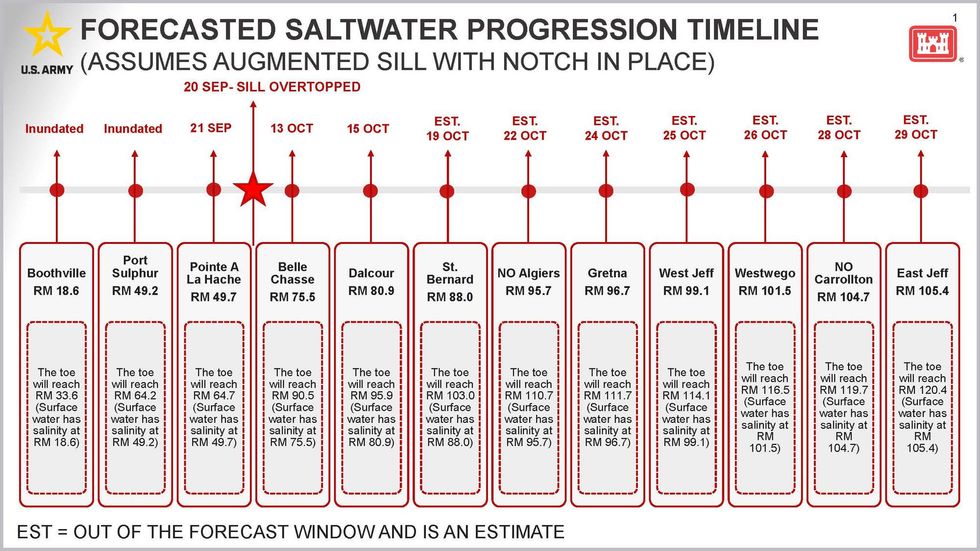
The US Army Corps of Engineers says without that rain and successful mitigation efforts, the saltwater will reach Belle Chasse on October 13th, St. Bernard on October 19th, and Algiers October 22nd.
Here is a look at the forecast progression of the saltwater:
 USACE
USACE