



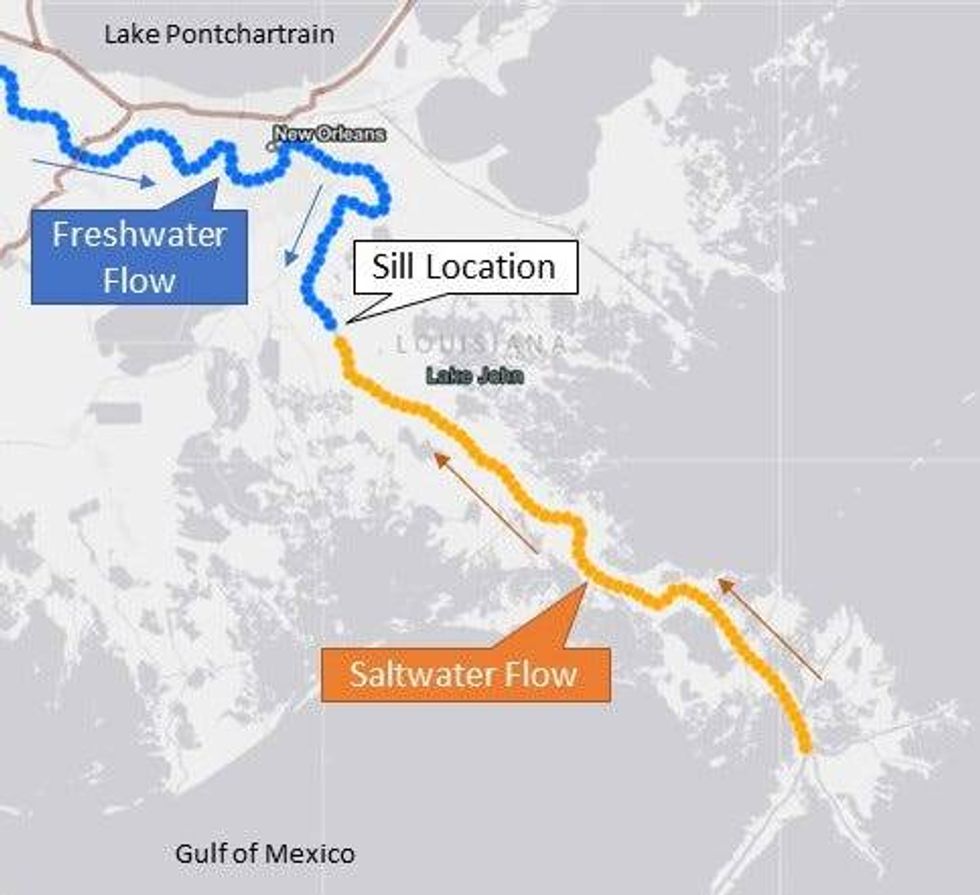
Louisiana Governor John Bel Edwards today consults with local, state and federal officials about the saltwater wedge that is pushing up the Mississippi River from the Gulf of Mexico.
"That wedge is real," Louisiana Ag Commissioner Mike Strain told WWL's Tommy Tucker. "We expect at the current rate that it will probably get into the Belle Chasse area, could be as early as October the second."
Strain says that would not only impact the drinking water in much of Plaquemines Parish, but would also create challenges for farmers irrigating their crops.
Jefferson Parish President Cynthia Lee Sheng says Jefferson is sending fresh water to Plaquemines to dilute any salt water getting into the water supply there.
She says if St. Bernard sees salt water getting into the system there, New Orleans will help send fresh water to St. Bernard.
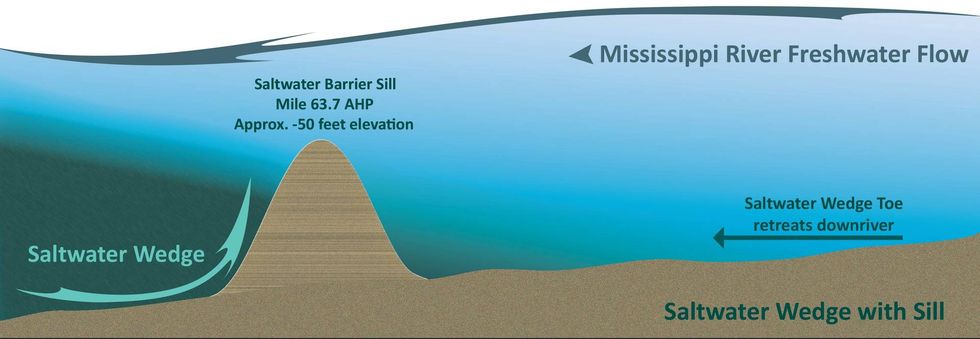
The US Army Corps of Engineers is trying to bulk up an underwater levee to keep the saltwater wedge at bay, but officials are preparing for possible impacts in St. Bernard and later Orleans Parish in the coming weeks.
 USACE
USACE
"A sand sill constructed to the proper height above the river bottom can reduce saltwater flow and artificially arrest the wedge," the Corps said in a news release.
 USACE
USACE
Authorities say despite what you may see on social media, there is no need to horde bottled water in the New Orleans area. People with high blood pressure and other conditions that could be impacted by higher salinity, however, should talk to their doctors.
"We have time. There is no need for people to panic... We have several weeks," Sheng said about the threat to Jefferson and Orleans water supplies.