

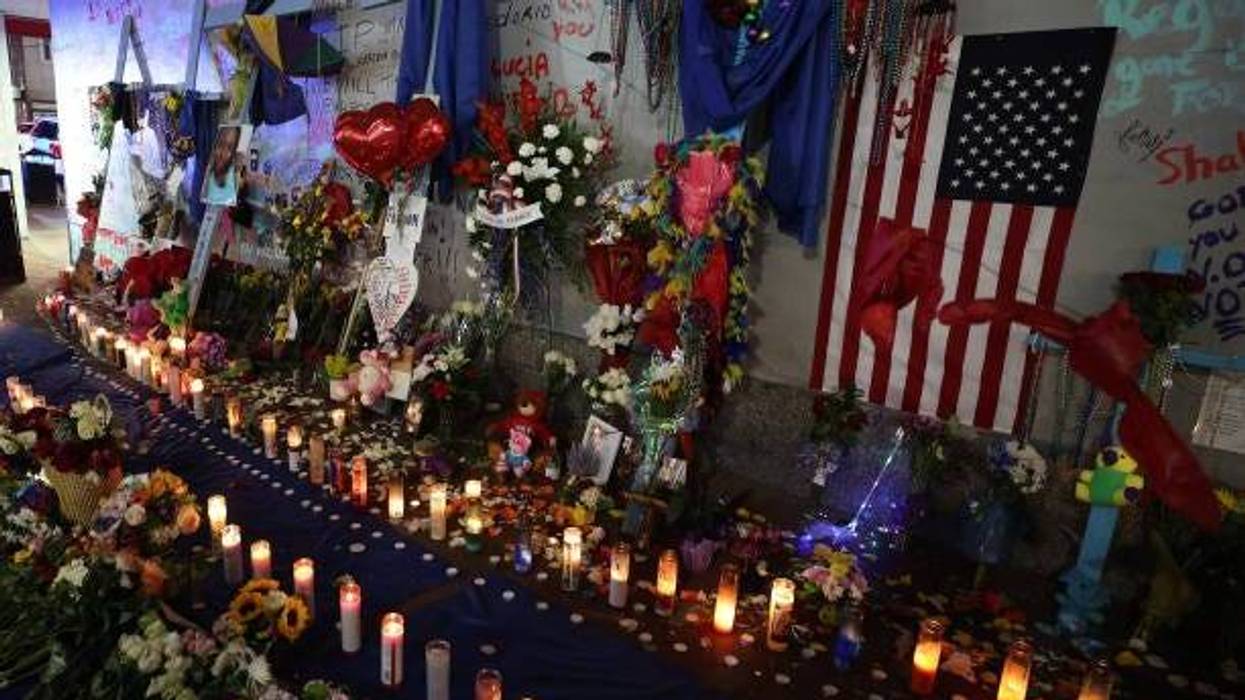

There’s still a lot of confusion surrounding the event that occurred on Bourbon Street on New Year’s morning, an event that claimed the lives of 14 innocent people.
Yet, even though many questions remain unanswered, there are some basic facts we do know. Here’s one of them, and it’s a bit of an elephant-in-the-room situation: radical jihadism is alive and well—regardless of whether we're brave enough to confront it.
Andrew McCarthy’s recent piece in the National Review explores this issue well. He reminds us how “Sharia Supremacism” remains the dominant reality for those living in the Middle East, as it’s the mainline interpretation of the Islamic faith.
Of course, there is no single accepted authoritative version of Islam, and it’d be unfair to lump them all into one group. However, when you take a plain, honest look at what’s going on, this “Sharia Supremacism,” is an ideology that promotes violence and terrorism. No one understands this better than Muslims forced to live under its oppresive rule.
Under the fundamentalist interpretation, it is the duty of Muslims to spread Islam by implementing Sharia, which is Allah's law and societal framework. This can be done in many ways.
One way is jihad, otherwise known as the struggle for Allah's cause. Essentially, jihad is a military struggle. It’s considered an act of defensive retaliation when Muslims deem themselves under attack, in which case Muslims are obliged to support. And, as you might imagine, what constitutes an “attack” is open to interpretation.
Sharia supremacists perceive Islam to be under constant attack, for example, if a territory that was once under Muslim rule falls under the control of non-Muslims, or if Muslims form an enclave in the West and a local government interferes with their determination to live under Sharia structures rather than the jurisdiction's laws. This is the reality of what we’re dealing with, and what was at the root of the attack that shook New Orleans a few short days ago, as this ideology and the groups behind it influenced Shamsud-Din Jabbar to plan his attack.
Now it’s our job to assess reality and be honest with ourselves about why it happened.
I said this on my last show and I’ll say it again: This type of attack could happen anywhere in the world. Pick a city, pick a state, pick a country you'll face any number off potential problems and threats when you manage a society and try to minimize security risks. But what's interesting is whether or not we’ll actually talk about it or whether or not we will take meaningful steps to actually deal with this at the federal, state, and local levels.
Ultimately, as I see it, it makes little sense to gripe about what we did or didn't do before or on New Year's Day. It has everything to do with what we do in the aftermath.
The first step is acknowledging radical Islamic groups as a threat. And the evidence is overwhelming as to what's going on.
When you look at the list of ISIS attacks, the New York Times had an interesting article outlining a series of attacks and plots either inspired or aided by ISIS over the past five years. The article is shockingly extensive.
The evidence isn’t convoluted: jihadist extremism is alive and well. It’s a threat to our society and as a community we have to come to grips with it. Maybe there needs to be a more concentrated and concerted effort in the development of actionable intelligence so we’re empowered to take the steps necessary to protect ourselves.
However, discussing terrorism of this ilk is so often unadressed by law enforcement at all levels. There's been this sensitization as it relates to the Muslim community in the manner in which we talk about it. There’s a reluctance for us to talk about the connections between religious beliefs and what is actually happening in this reign of terror across the world. We need to get over that. Facts are facts. We need to talk about what is actually happening out there and the threats that are being made to our way of life.
It's going to be interesting to see where we here ultimately end up, and I have serious concerns over how we’re about to handle the aftermath.
Right now. The best that I can put together—it seems as though we may have four independent investigations occuring at once at the local level and state level. Louisiana Attorney General Liz Morrell says she'll have an investigation. Council persons at large, Morano and Morrell, say they’ll have an investigation. Councilman Oliver Thomas indicated he’ll individually conduct that investigation. And the city administration is possibly asking someone like former NYPD Chief Bill Bratton to conduct an investigation.
This glut of investiagation sits uneasy witth me because in a case like this you don’t need more than one cook in teh kitchen. Otherwise it gets crowded and hard for the citizens to follow along or care about the matters that directly affect them. We need to execute properly and clearly, and I fear we won’t.
The last thing we need is more sound-bite politicians running around all over the place talking about this and that, speculating when they know very little.
Our reputation as a city that hosts major, global events is at stake. And unless we can speak with one voice, we’ll lose our standing.
There’s benefit to carrying out an investigation, but we don't need four, five, or six independent operations. We just need one clear, communicative mission. We know what security measures we need. We have a desire to implement. Now, we just need to execute.