



Everything we love about South Louisiana depends on a system that we don’t really think about.
The wetlands, the seafood, the coastline, the Sportsman’s Paradise, the City that Care Forgot - it all depends on a system that is hidden from most of us. And last week, the Trump administration decided to change a part of that system in a big way.
When I say ‘a system we don’t think about,’ I’m talking about the rules that we have in place, rules that we have painstakingly put in place over the last hundred years - sets of laws, environmental reviews, regulations meant to protect our air, our water, our wildlife.
These rules aren’t in place because it’s fun to regulate industry; they are in place to make sure we can drill, fish, ship, and otherwise carve out a living here without destroying the very thing we depend on.
Knowing what we know now about how the canals dug by the oil and gas industry have destroyed the wetlands and doomed enormous parts of our state to fall into the ocean…
Knowing what we know now about how cutting down the huge virgin cypress forests that existed on this land for thousands of years meant we were significantly more exposed to violent, destructive hurricanes…
Knowing what we know about how inviting refineries and chemical plants to set up shop all around us meant we would be exposing generations of people in this listening audience to pollution undeniably linked to more cancer, more failed pregnancies, more birth defects, more premature death…
Knowing all that, you have to ask - could we have done this differently?
Was there a policy, a rule, a line we could have drawn that protected people and protected our air and our water, all without killing jobs, without driving industry away? Was there a way to balance these competing interests?
What if that line already existed… and our government just decided to erase it?
Last week, the Trump administration decided that one of the biggest, best, most effective rules we have in place to protect the ecosystems that we depend on was actually a threat to national security and needed to be gone.
The White House convened a committee of mostly Cabinet members, a committee that has come to be known as the God Squad, because this committee only convenes to decide when to suspend the Endangered Species Act. They are called the God Squad because when they meet, the decisions they make can mean a species of plant or animal is protected, or it is not protected. And when it’s not, that probably means those species are doomed to extinction. Gone from the face of the Earth forever.
The God Squad committee has only been convened three times since the passage of the Endangered Species Act in 1973. Trump’s version of the God Squad - again, made of political appointees, not scientists - met at the end of March and after a closed-door fifteen minute meeting, they decided that they would be lifting Endangered Species Act protections for dozens of endangered species living in and around the Gulf of Mexico, including whales, turtles, all sorts of fish, birds, coral, other marine life. They said they would be lifting these protections in the name of national security.
When we hear national security, we probably aren’t thinking about whales or turtles or fish or birds, right? We probably think about guns, tanks, planes, satellites, computers, supply chains, spy agencies, and branches of the military. But as of last week, national security now also means low prices for gas and oil.
And this White House is telling us that fossil fuel companies operating in the Gulf of Mexico can’t possibly do their jobs and also at the same time make sure they aren’t wrecking the place we call home and pushing animals already on the brink of extinction to the point of no return.
Cheap energy matters a lot to this country, you won’t catch me saying it doesn’t. Nobody is pretending that. But this was not a response to a real emergency. This wasn’t reactive, this was premeditated. They announced they were going to convene the God Squad ahead of time with the explicit goal of lifting these protections for this one industry. This wasn’t “we have to act fast in the interest of national security,” this was “we’re going to use this tool to get the outcome we want.”
Convenient, isn’t it, that this handout to the oil and gas industries in the Gulf (which they did not ask for but are nonetheless grateful to receive) lines up exactly with this President’s push to yoke us to fossil fuels and snuff out renewables while the rest of the world does the exact opposite?
“National security” is a brand-new justification for lifting these protections, for striking these rules from the books. It’s never been done before. Granted, we’ve never been in a war with Iran before, watching oil prices spike above $100 dollars a barrel and threatening to destabilize the entire world economy. But we just expanded what “national security” means in a big way, and once you expand what that means, you don’t really shrink it back down.
This isn’t the referee making one bad call - it’s one referee changing the rules of the whole game.
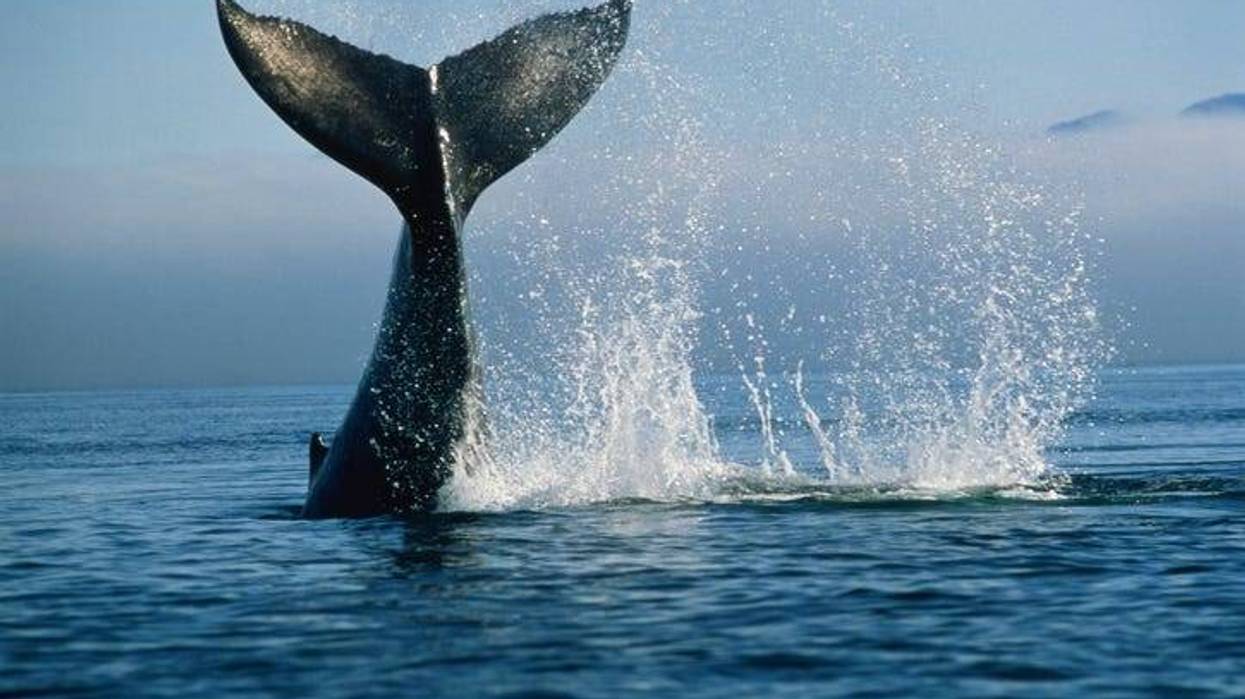
One of those species that’s in the most trouble is the Rice’s whale. The only place on Earth where the Rice’s whale lives is in the Gulf of Mexico. And there are only 50 left. Not fifty thousand, not five hundred - fifty. If ten of those whales die because they got hit by tankers, or the oil companies’ sonar scares them away from their habitat, or the fish they eat for food were killed off by pollution or oil spills - it’s game over for them.
There’s a line in the Bible, in the book of Genesis - man is put in the garden to work it and take care of it. Not burn it down faster because it’s good for business. You don’t have to love whales, but you should care about what it says about us if we’re willing to let them disappear on our watch.
But you should care about this:
Every time we’ve made decisions like this in Louisiana - every single time we have said “we’re gonna do this right now because it’s good for business and we’ll deal with the consequences later” - we are still paying for it today.
We are paying for decisions just like this made 100 years ago. We are paying every day for the sins of our fathers. We are paying with our disappearing wetlands, with our vulnerability to storms, with the health of our communities and the sanctity of our bodies.
The question isn’t whether we need energy. We do. The question isn’t whether we need to protect the environment from the energy companies. We do.
Do we get the oil or do we save the whales? The answer is yes.
The real question is whether or not we’ve learned anything. Whether after everything this state has been through, everything we now know - we’re still willing to once again roll the dice on the place we live… and hope this time it turns out differently.
Because history here has a way of repeating itself, and it’s usually not kind.
And one day the people who come after us are going to look back at this moment… and ask what the hell we were thinking.
Trump wants to change environmental rules in the Gulf. History says Louisiana will pay the price
Trump wants to change environmental rules in the Gulf. History says Louisiana will pay the price


