



Paula Neale says when she was experiencing symptoms before and after menopause, she felt like her doctor wasn't listening.
"I wasn't feeling myself. I knew something was wrong. It was after my periods ended when my symptoms ramped up. I went to my gynecologist and she basically told me 'well, it can be years'. I couldn't believe it. There was no suggestion of anything to do, or any advice," she shook her head.
For many women like her, menopause care still misses the mark.
"She never even told me about treatment. She basically just told me to live with it," she shrugged. "I asked my doctor about hormone replacement and I was told I was too old. She didn't offer any advice.
Neale said a workshop through her employer opened her eyes to what might be happening and she researched further.
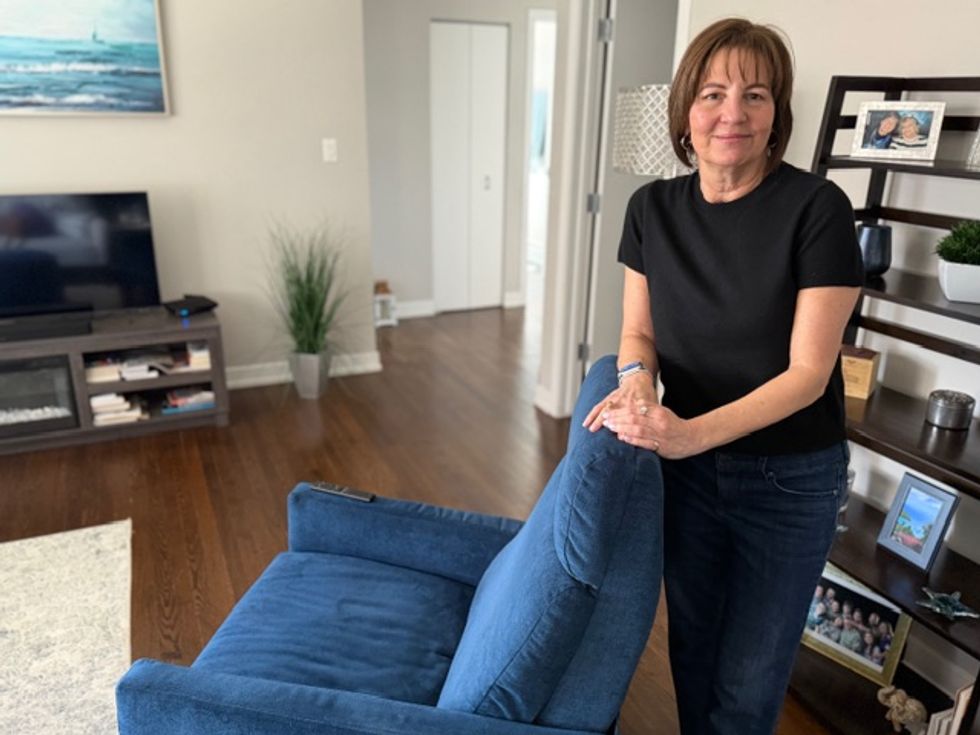
Patricia Neale, 67, felt like her doctors weren't listening to her menopause concerns
Lisa Fielding/WBBM Newsradio
Dr. Kristen Venuti is an obstetrician at Northwestern Medicine. She recalls little training as part of her education.
"You just don't get a lot of exposure to menopause and mid life care. In independent practice, a lot of doctors are uncomfortable with it. We need to incorporate it more into the curriculum. There's just a lack of knowledge and exposure. I spent more time in our menopause center because I knew I was going to be an OB/GYN so I wanted to be more comfortable with it. You can really make an impact in a woman's life, every stage," said Dr. Venuti.
Patricia Handler is the co founder of the Center for Sexual Medicine and Menopause at Northwestern Medicine. She says women often feel dismissed or their concerns are brushed off.
"I'm seeing a lot of patients saying I don't where to go and I heard there's a menopause clinic and I'm suffering miserably," she said.
Handler says a patient's first visit to the center is 45 minutes.
"We spent a lot of time talking to women in menopause. We learn about them, we listen to their concerns and their symptoms. I don't think doctors in the last 25 years had a lot of menopause training. A lot of providers don't have the knowledge or the time in their office but we do and we specialize in it." said Handler.
Finding a doctor who specializes in menopause can be difficult.
The Menopause Society, a nonprofit organization that provides resources for health care professionals, certifies providers in menopause care through exams and continuing education. Membership has spiked in the past few years, with more than 4,000 certified physicians to pharmacists, up from 1,000 a decade ago.
It recently launched a $10 million training program to help train more than 25,000 health care workers in menopause and perimenopause.
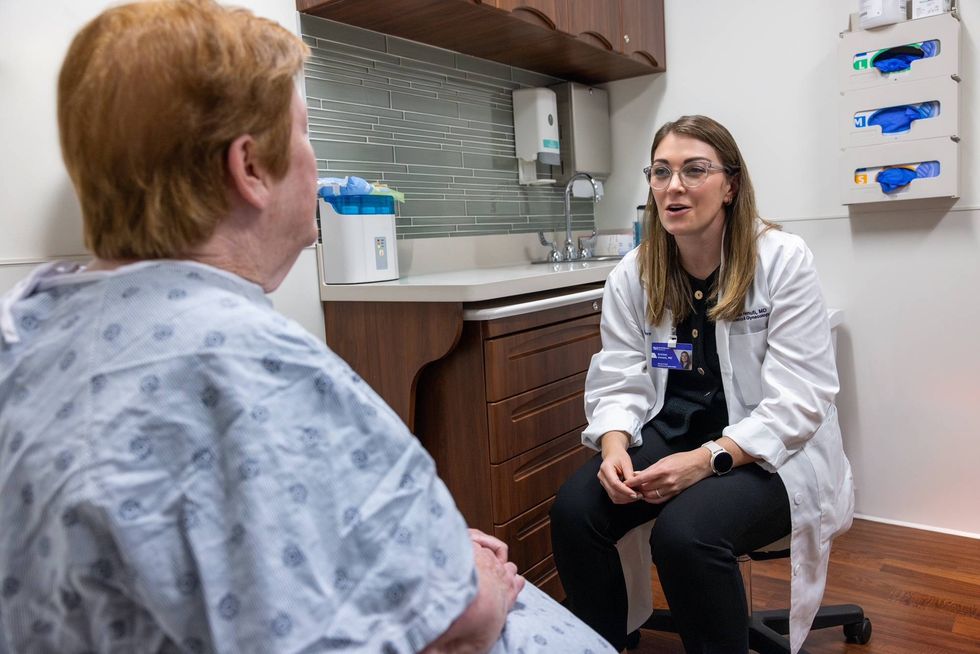
Dr. Kristen Venuti, OB/GYN, Northwestern Medicine
NM Media Relations
Dr. Venuti says a third of her patients are women over 40 and they are living longer so there is a growing push to mandate menopause education in residency programs and for continuing education. She says things are changing but doctors and specialists need to catch up with what women already know.
"I do think it's great to get the awareness out there, and empowering women to advocate for themselves and challenge your doctors, ask questions. It's the only way this can change,": she said.
Neale says she finally felt heard when she visited the center at Northwestern.
"It was the best hour of my life I think," she smiled.
Now, she's determined to help others like her, through this critical part of a woman's life.
"This is ridiculous that no one talks about it, deals with it or even offers any solutions. I tell everyone there are options and it can be better.
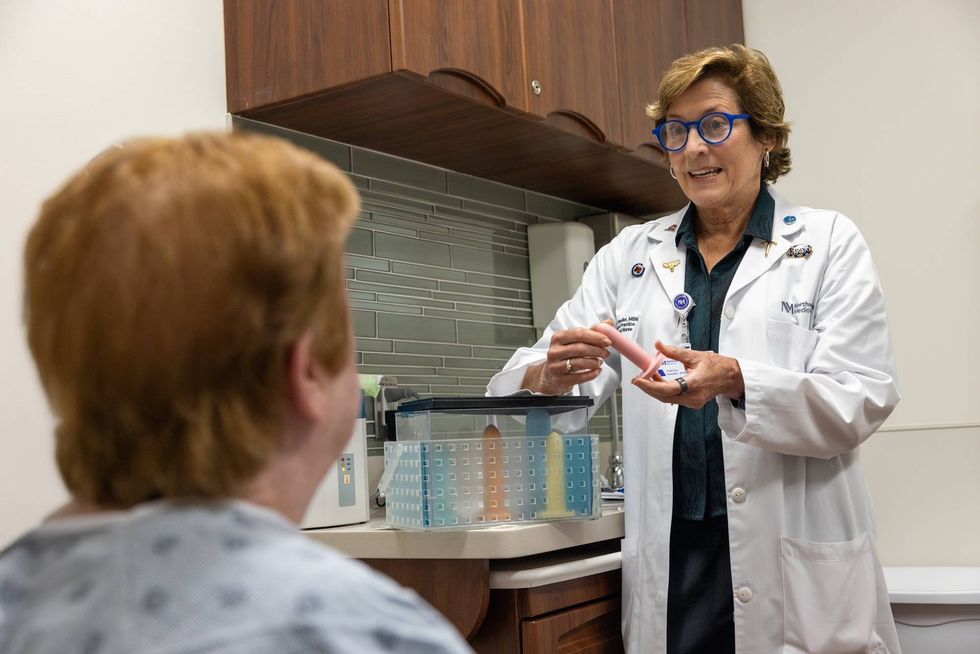
Patricia Handler, Nurse Practitioner, Co Founder, Center for Sexual Medicine & Menopause, Northwestern Medicine
NM Media Relations
There is a growing push to mandate menopause education in residency programs. And that will mean women won't have to take this journey alone.
"I feel like more and more physicians, nurse practitioners and providers are started to be more interested in treating women with menopause. " said Handler.
In the final part 5 of our series, we talk about how menopause affects more than just the woman, how loved ones can better understand what's going on and how a new generation is not only talking about it, they are learning, living and thriving throughout mid life.