

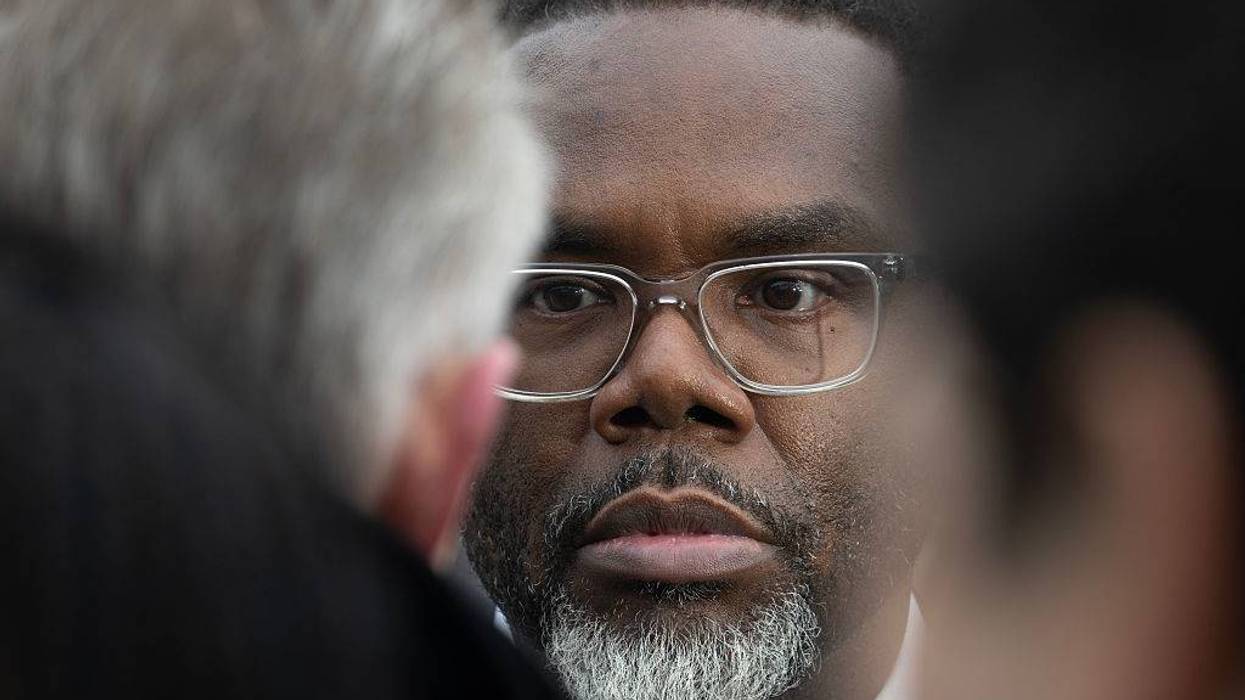

One of Chicago Mayor Brandon Johnson's frequent talking points over the second half of his mayoralty has focused on declines in violent crime since taking office. There remains some debate about whether the drop in murders ... to "the lowest level since 1965," as the mayor oft reminds reporters ... is more attributable to Cook County State's Attorney Eileen O'Neill Burke's more aggressive stance toward low-level criminal suspects or the mayor's support of non-policing strategies, but it's hard to argue with the numbers.
However, that drop in violent crime compared with just a few years ago appears to have plateaued, with the Chicago Police Department's own numbers suggesting that homicides so far this year are running a little over 2025's number. And while there are signs that fewer young people are engaging in those so-called "teen takeovers," they still seem to be fueling criminal activity; new Deputy Mayor for Community Safety Emmanuel Andre told a City Council subcommittee last week that police made 25 arrests at unsanctioned gatherings the previous weekend.
And so the mayor, who created a community safety position inside his office after being sworn in, appears to have decided that the way to step up his administration's response to violent crime is to create new arms of government. Specifically, the "Office Of Gun Violence Reduction," which for now will be lead by Andre and which could eventually become a stand-alone city department (the ordinance to create it is reportedly in the works).
The day before the mayor signed the executive order creating the office, he told me that the goal was to take the disparate parts of the city's anti-violence efforts and unite them under one person: "We're the first major city in the country to set up an office dedicated to reducing gun violence. It's going to allow for an advisory council to have the kind of insight on the ground to make government far more nimble in how we deliver resources and services."
"I'm not sure what he means by that," said Downtown Ald. Brian Hopkins about the mayor's order. Ald. Hopkins (2nd Ward) is chairman of the City Council's Public Safety Committee, and has been working for more than a year to craft ordinances designed to crack down on those "teen takeovers." "I don't think you can draw a direct causation between shifting around the bureaucracy and a reduction of crime on the streets."
And while he told me he hadn't fully dug into the mayor's proposal, he suggested the office could be beneficial in providing oversight to make sure the city's spending on community violence intervention and similar programs is effective. "I'm not sure that's the direction he's going in," the alderman continued. "We need to take a closer look at it."
There remain many questions about the mayor's new strategy, chief among them how it'll be funded ... not a theoretical concern for a city facing a significant structural budget shortfall next year. When I asked about that, Mayor Johnson returned to a now-familiar theme: "I'm going to continue to work with City Council, the state Legislature and every level of government to challenge these big corporations to put more skin in the game, because it's a matter of life and death."
It also may be a matter of optics as the mayor seems increasingly likely to announce a run for re-election. For a man who ran and won on the promise of making Chicago "the safest, most affordable big city in America," an increase in crime, however granular, in the run-up to next February's Election Day would be especially bad timing ... especially with so many current and potential candidates looking to take him on.