

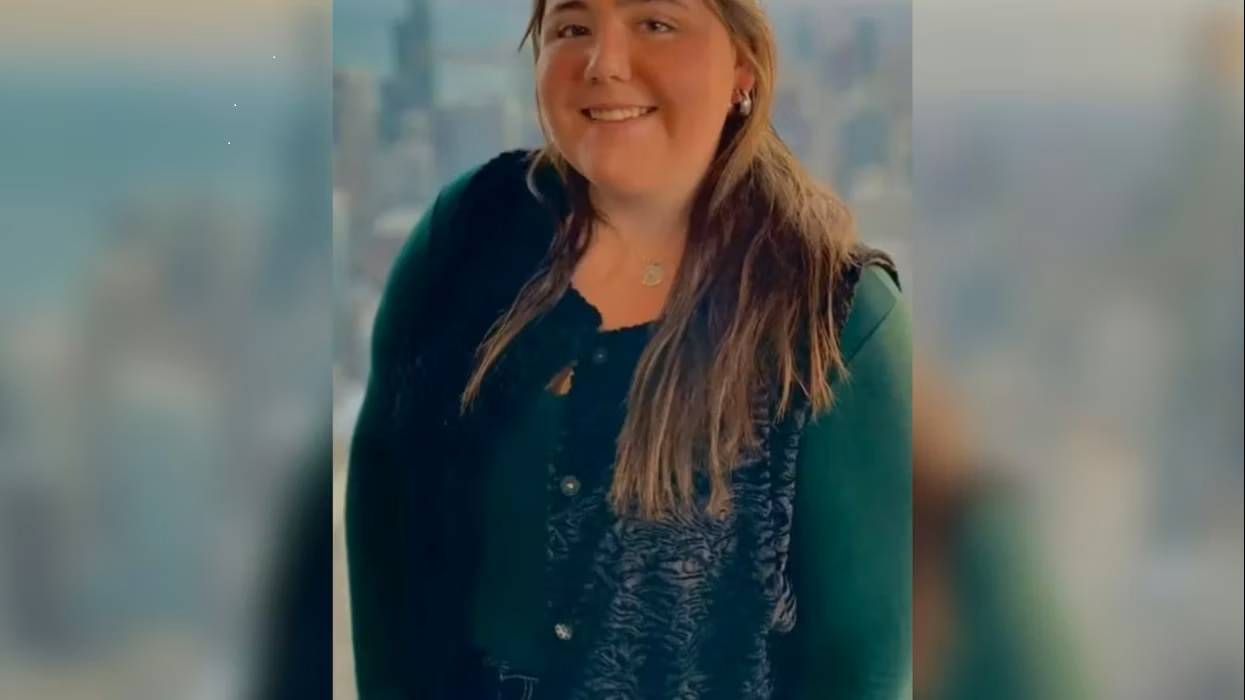

Sheridan Gorman should still be alive.
The 18-year-old from New York should still be experiencing life on the Rogers Park campus of Loyola University Chicago ... taking classes, hanging out with friends, and enjoying the campus and the neighborhood.
On that, everyone who's weighed in on her shooting death March 19th near Tobey Prinz Beach is in agreement.
Beyond that is where the disagreements begin ... and where the city of Chicago and the state of Illinois have again become the focus of an emotional national debate.
Gorman and her friends were on the pier at the park looking at the skyline, and possibly the Northern lights, when Chicago police say they encountered a man who fired on the group, hitting Gorman in the back as they ran away. Investigators have identified the suspect as an undocumented Venezuelan national who came into the U.S. in 2023 and had a warrant out for his arrest after skipping a court appearance on a shoplifting arrest shortly after his arrival in the country.
President Trump and other Republicans have sought to tie Gorman's death to "welcoming" policies in Illinois and Chicago, as well as what the President describes as the "open door" policy of his predecessor, Democrat Joe Biden. "These people were let in by Biden ... we're getting them out, we're getting them out fast," the President told reporters in Florida this week. "That's why ICE is so important."
Gov. J.B. Pritzker's Republican opponent in November's election, former state Sen. Darren Bailey, also seized on the circumstances of Gorman's murder, noting that Pritzker spent several days in Washington, D.C. and San Francisco instead of responding to the shooting. "Illinois families deserve ... a leader who prioritizes the people of this state ahead of their own political ambitions," Bailey said in a statement released by his campaign, which went on to call the governor "soft on crime."
The governor initially also issued a statement ... and during an appearance in Springfield on Tuesday, said he'd reached out to intermediaries to Sheridan Gorman's family to express his condolences. "The Gorman family has suffered mightily," he said, going on to acknowledge "failures" in immigration policy that led to her death. "Those failures of course extend beyond the border of Illinois. They're national failures ... a failure to have comprehensive immigration reform." Chicago mayor Brandon Johnson echoed that sentiment, while acknowledging the Gorman family's pain and loss. "There's no words that one could express that could properly console a family that lost their baby," said the mayor. "I'm going to continue to pray for their strength. It's un-Godly."
It's important to note that while the governor and mayor are the highest-profile targets of criticism over those policies, they didn't create them. Chicago's "welcoming" ordinance was first enacted during the administration of former Mayor Harold Washington, and Illinois' law limiting local law enforcement cooperation with federal immigration activity was signed into law by former Republican Gov. Bruce Rauner.
The mayor has said the city's adoption of "welcoming" ordinances have made people safer, in part because it's rebuilt trust between immigrant communities and police officers. "We've actually seen a reduction in domestic violence, particularly for Hispanic women, who feel stronger and more confident to call police in those instances," the mayor said on Tuesday. However, for all the work the city has done to bring down violent crime, Johnson acknowledged: "For this particular family, that hard work did not result in (the Gormans') child being here."
For the Gorman family, those expressions appear to have been inadequate. A representative released a statement at week's end that leveled pointed criticism at local leaders' attempts to frame her death as a failure of national policies or against a larger public safety backdrop. "We will now allow Sheridan's life to be reduced to a talking point or a generalization," the statement read. "What happened to Sheridan cannot be reduced to a senseless tragedy ... This was not random. It was not inevitable. And it cannot be treated as though it were."
Sheridan Gorman's loved ones also pushed back against the mayor's implication that a quick arrest in the case shows the city's systems are working: "Safety is not defined by how quickly a case is solved after the fact. It is defined by whether a young woman like Sheridan is protected in the first place."
And they addressed a statement from Rogers Park Ald. Maria Hadden that responded to a reporter's question about whether Sheridan Gorman's shooting was targeted: "Our daughter was not in the wrong place at the wrong time. The system failed her." Ald. Hadden (49th Ward), for her part, has apologized for her unintended implication that Sheridan Gorman was somehow responsible for her own death, while criticizing media outlets that appeared to take her comment out of context. Her ward office has been closed for days over threats in response to that statement.
To reduce Sheridan Gorman to a political issue would do a disservice to her memory. But as people process her fate, it's clear that city and state leaders will continue to face questions about why she's not alive, and what they'll do to protect the next wave of college students set to come to Chicago this fall.