


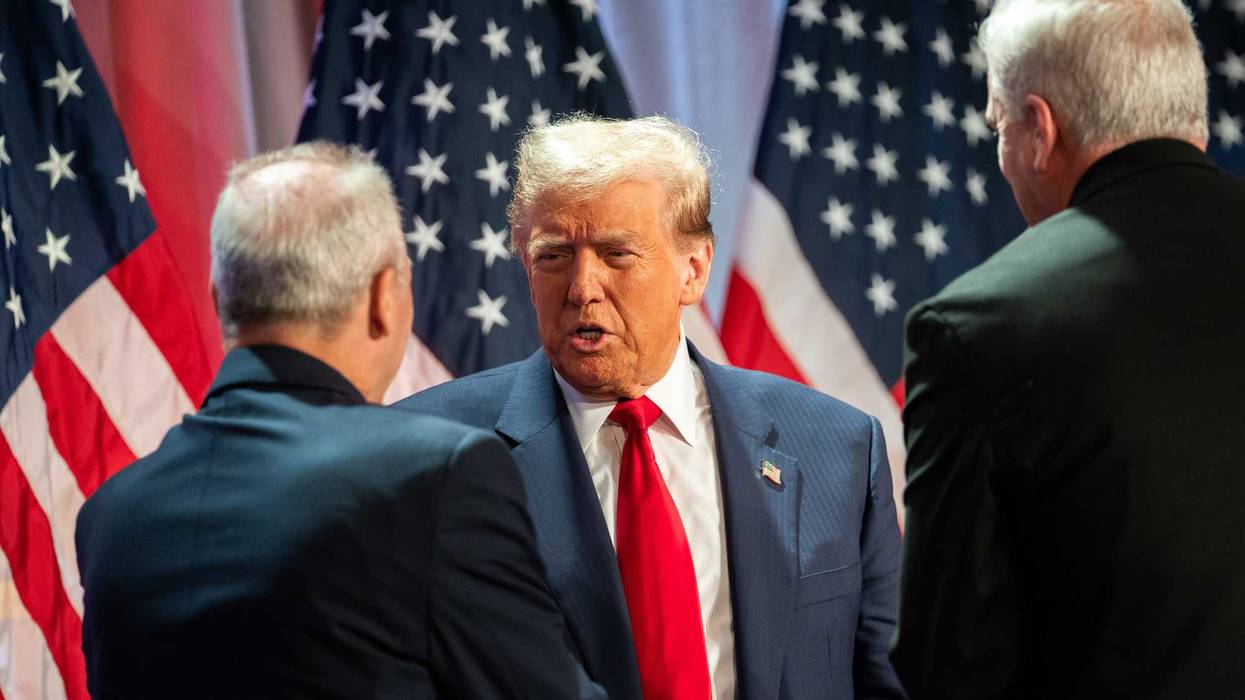

(WBBM NEWSRADIO) — The tariffs that President-elect Donald Trump has promised to impose on China, Canada and Mexico could have wide ranging effects on the nation's economy and consumers, a Northwestern economist said on Tuesday.
Nancy Qian, a professor of economics at Northwestern University's Kellogg School of Management, said higher tariffs could make American products more competitive. She added, though, that tariffs also lead to higher prices on imported goods, which would increase the cost of living for U.S. consumers.
"Do the benefits outweigh the costs?" said Qian. "The number of jobs that are going to be created, does that outweigh the additional costs for consumer goods and the potential job loss for individuals working for exporters? Because exports will go down."
That's because China, Canada and Mexico would most likely retaliate with their own tariffs, Qian said. She said prices could rise significantly on a wide variety of products, including food, consumer goods and construction materials.
Jeff Gilbert, the automotive reporter for CBS Radio, said that includes the cost of new vehicles, even those sold by U.S. automakers.
"A lot of vehicles that actually have domestic badges on them are built in Canada or Mexico, but of more importance is there are a lot of parts that may be made in Canada that come to a plant in the U.S. — same with Mexico — so if there's a tariff put on those parts, that cost goes up even if the vehicle is built here in the U.S.," he said.
He said carmakers that while carmakers have talked about how big of an issue affordability is, they will need to figure out what they can and can't pass onto consumers.
Gilbert and Qian both say American businesses will likely be reluctant to pass along all of the extra costs related to tariffs because of the effect that would have on U.S. consumer spending.
Listen to WBBM Newsradio now on Audacy!
Sign up and follow WBBM Newsradio
Facebook | Twitter | Instagram | TikTok