


Every April 1st, a wave of lighthearted mischief and playful deception sweeps across the globe. From classic "kick me" signs to elaborate media hoaxes, April Fools' Day is a time-honored tradition of celebrating the absurd. But where did this day of foolishness begin?
According to SMU Associate Professor Owen Hanley Lynch, there is no single, definitive origin for April Fools' Day. Instead, it's a tapestry of historical traditions and cultural shifts that have converged over centuries. One potential root lies in the ancient Roman festival of Hilaria, a celebration around the spring equinox that marked the transition from the old year to the new with merriment and foolishness.
The Calendar Shift Theory
Another popular theory traces the tradition back to the 16th-century transition from the Julian to the Gregorian calendar. Before this shift, the new year was often celebrated around April 1st, coinciding with the spring equinox and Easter. Those who were slow to adopt the new January 1st New Year were often mocked as "fools".
The Feast of Fools: A Medieval Perspective
In medieval times, the "Feast of Fools" was a common tradition, particularly within religious institutions like abbeys. During this time, social hierarchies were playfully inverted. A low-ranking member of the community might be appointed "Abbot" for the day, decreeing silly laws and wearing ridiculous attire, like a carrot on their nose. This served as a way to poke fun at authority and acknowledge the inherent silliness that can exist within structured systems.
A Global Phenomenon
The spirit of April Fools' is not confined to any one culture. Countries like France, England, and especially Scotland take the day quite seriously. In Spain, a similar tradition involves tricking people and then lightheartedly calling them a "silly dove".
The Power of the Prank
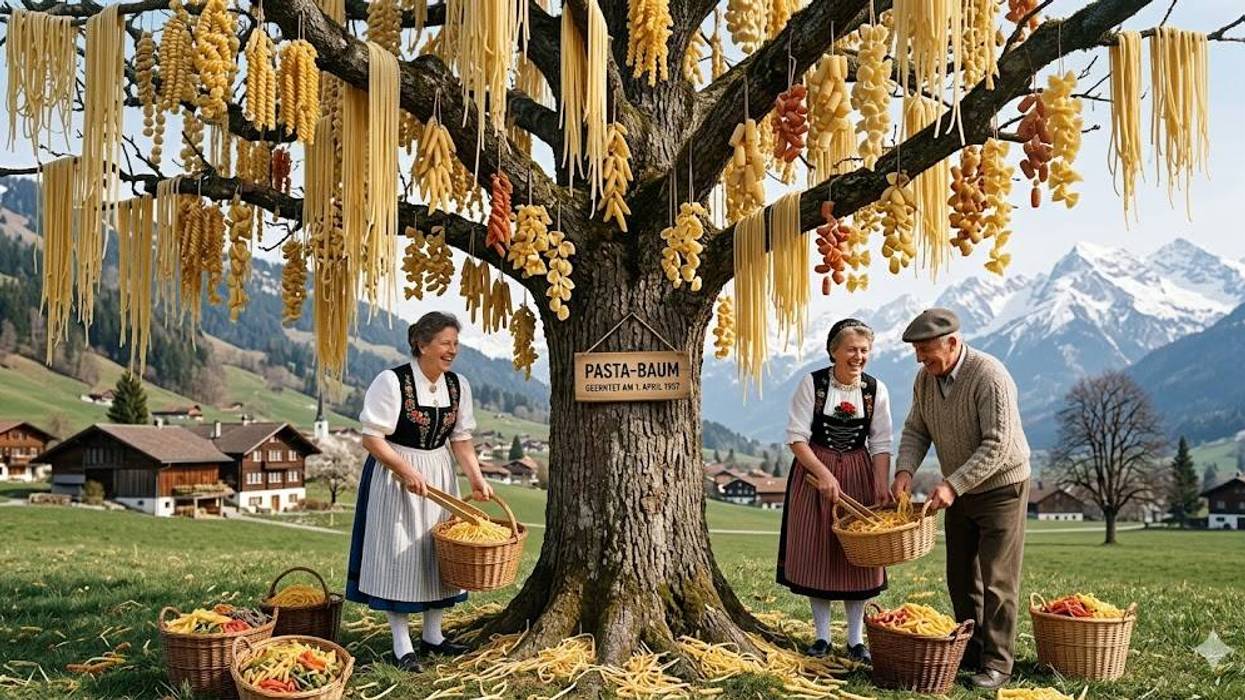
Throughout history, April Fools' pranks have ranged from the simple to the incredibly elaborate. One of the most famous examples occurred in the 1950s when the BBC aired a segment about "pasta trees" in Switzerland. Thousands of viewers, captivated by the footage of people "harvesting" spaghetti from trees, were completely fooled by the hoax. In 1962, the Houston Chronicle published a doctored photo showing the iconic San Jacinto Monument in ruins. In 1992, LA International Airport hung a massive banner saying "Welcome to Chicago" and that confused a few flyers and in 2003, Dallas Mavericks owner Mark Cuban staged a fake fight, on the court, with a "fake" NBA referee.
April Fools' in the Modern Age
In today’s fast-paced, media-saturated world, the role of April Fools' Day may be changing. With humor so readily available through social media, memes, and viral videos, the novelty of a single day dedicated to pranks might be diminishing. However, the core essence of the day—using humor to cope with stress, question authority, and connect through shared laughter—remains a fundamental part of the human experience.
As Professor Lynch suggests, April Fools' Day serves as a "punctuated break" that allows us to recognize the absurd in our everyday lives. Whether it’s a simple joke among friends or a large-scale media stunt, the day continues to remind us not to take ourselves, or the world around us, too seriously.