



Buffalo, N.Y. (WBEN) - In the early morning hours of Monday, March 14, Buffalo Police responded to a call of an individual saying someone was threatening to kill him. Officers responded to an apartment building on the 1900 block of Hertel Avenue where they encountered that individual, who was holding a large knife in the stairwell.
The four officers that responded attempted to de-escalate the situation multiple times, as they eventually backed out of the apartment and into the streets. The individual, identified as 30-year-old Dominique Thomas, continued to follow the officers and approach them with the weapon.
After the multiple attempts to talk Thomas down, he allegedly ran toward the officers with the knife in-hand and was subsequently shot multiple times by two of the police officers.
Thomas was then sent to Erie County Medical Center, where he was eventually arraigned on Tuesday on two counts of Menacing a Police Officer, which are Class "D" felonies.
While the Erie County District Attorney's Office has cleared the officers of any criminal wrongdoing with this incident, some feel that the police officers could have been better equipped to handle the situation that took place. Some have called on Buffalo Police to increase the use of tasers.
"The community needs leadership that is serious about mental health, and implementing tools and training and accountability that has real impact and not just the visual appeal," said Dominique Calhoun, member of the non-profit, community-created Buffalo Police Advisory Board during an event on the steps of Buffalo City Hall on Tuesday. "In 2020, we were promised tasers, BolaWraps and a behavioral health team as a solution. In 2022, none of the three were available to Mr. Thomas, as he had his mental health crisis and called the police for help. That is a problem."
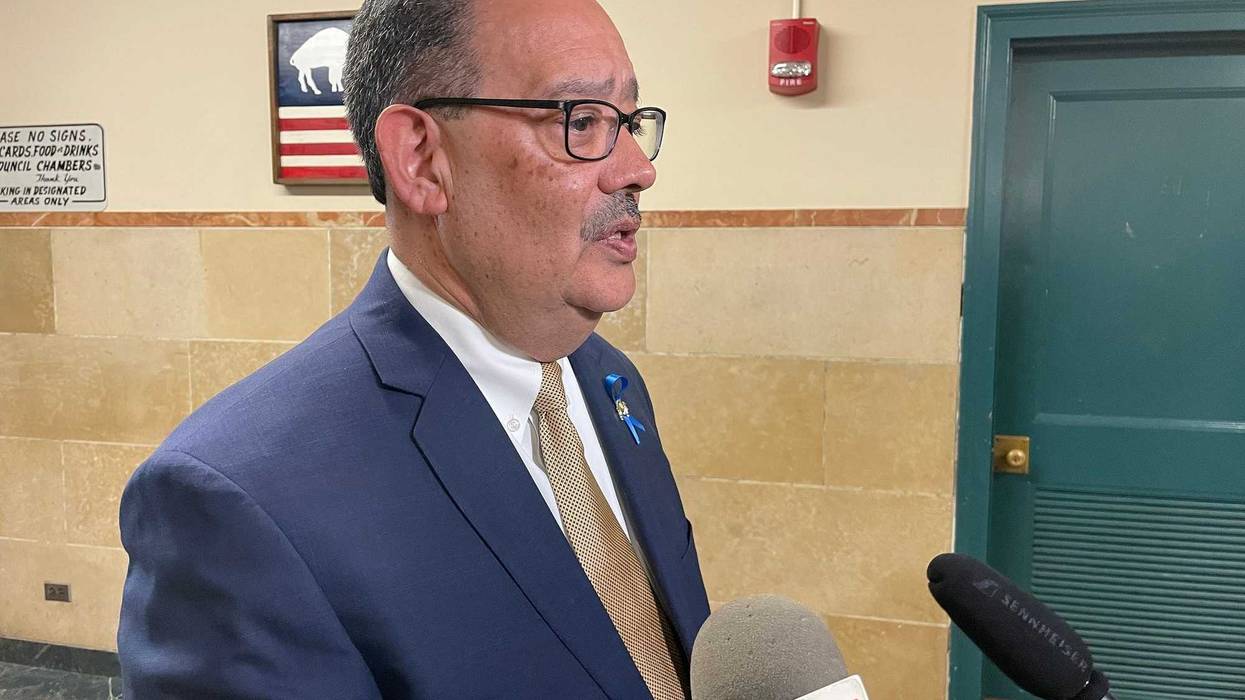
"I saw the video, I saw them trying to talk down and de-escalate the situation from the time they were in the hallway, down the stairs, backing up onto the street to the point where the man rushed at the police with a knife in his hands. At that point, they discharged their weapons, and I believe according to law, they were justified in doing that," said Council Member David Rivera, who served as a Buffalo Police Officer from 1982 to 2008. "Their life was at risk. I'm sure the officers were traumatized by the incident itself, and it's unfortunate. I just wished it could have been prevented."
"The gentleman, perhaps, needed some help. Who knows what was going through his mind? So hopefully, we can prevent that by providing the kind of resources that people that are going through these crisis need."
A taser is one of the many tools that officers could have at their disposal to try and de-escalate similar situations. Rivera says the Common Council and others would like officers to be better equipped with tasers or other less lethal weapons when responding to calls, and that is something they are struggling to make sure they have adequate resources for - in terms of equipment, technology and manpower - for them to serve the community as best and as safe as they can.
"When the person poses a risk to someone, to themselves or to the police officer, at that point, you use a taser. You try to de-escalate the situation sometimes using common sense, just talking to people, talking them down," Rivera explained. "Some people are really good at doing that. You have negotiators and hostage management teams that are really good at talking people down from things. So that's part of the training that they get to dealing with crisis. They go through the academy, they get maybe 30 hours of training. The other officers that work on the behavioral team, they get 20 hours of additional training. So you've trained the officers to deal with situations like that, and hopefully, the greater number of times you're going to talk people down.
"Officers never thought in their life that they were going to go work that day and then they were going to have to discharge their weapon. It's very traumatic to the police officer, as well, and unfortunately for the victim."
While tasers were not available for the officers involved in the March 14 incident, Rivera says it would be a goal of not only the Common Council but also for Buffalo Police to have every officer trained and equipped with a taser. However, it goes well-beyond just being trained with tasers, because he knows officers will come across many different situations where they're going to have to de-escalate.
"Whether it's mental health, whether it's other issues, domestic violence or hostage management, you're going to train police officers." Rivera said. "Our goal is to provide [the Buffalo Police Department] with the training dollars and resources they need to have these officers trained, whether it's on days that they overlap or coming in for overtime. Whatever it is to make sure officers receive the training that they need. I think we need to make every effort to provide it for them."
Where Buffalo Police is also facing some criticism with this incident is the lack of availability for the behavioral health team to assist officers with the situation. Buffalo's behavioral health team currently consists of eight members that set hours. However, it is the belief of the Buffalo Police Advisory Board that their availability should be 24/7.
"This team currently consists of six officers with two lieutenants, and until funding is found, we believe the shift should be split into two so they can cover a 16-hour day," Calhoun said. "These individuals need to be available 24/7, and training needs to be given to additional officers to be deployed when needed while on the clock."
As Rivera believes, the hours the behavioral health team currently works is probably reflective of the highest concentration of calls with regards to mental health. However, he is in agreeance that there should be additional hours of service time for the behavioral health team, and that Buffalo Police should try to utilize the manpower the best way we can.
"It's unfortunate that we have a limited number of police officers answering 9-1-1 calls throughout the whole city on a 24-hour basis, whether it's shootings, burglaries, robberies, petty larcenies, criminal mischief. They're answering calls and quality of life calls, so they're all over the city, and sometimes their response time is critically important," Rivera said. "Then in certain situations like this, you have mental health crises, as well. So we just have to look at the data that they have and look at how we can prioritize the resources based on that data that we have."
Calhoun and the other members of the Buffalo Police Advisory Board are going to work on the recommendations through the City of Buffalo, and work on a ballot initiative to form a community structure of an independent model that is free of the Common Council, and also free of Buffalo Mayor Byron Brown.
As for Rivera, he is leading the charge with, once again, establishing a police advisory board of 11 new member that will replace a similar disbanded committee that reviewed the Buffalo Police Department.
To be eligible for the committee, members must be city residents age 18 or older, and the application process begins March 23 and will run through April 13.
Rivera feels it's very critical to have an operation such as this back up and running to be able to help improve the relationship between the Buffalo Police Department and the community.
"The composition of the board is very important," Councilman Rivera said. "We want people with mental health background, legal background, personal restorative justice background, criminal justice background, community. So we're looking at a very diverse board that can lend some expertise and work with the police department, engage the community and function [in a way] that is stable. That is our goal, and we're going to start the application process this Wednesday through Facebook, through emails and through physically coming to City Hall and clocking in at the clerk's office with their interest."
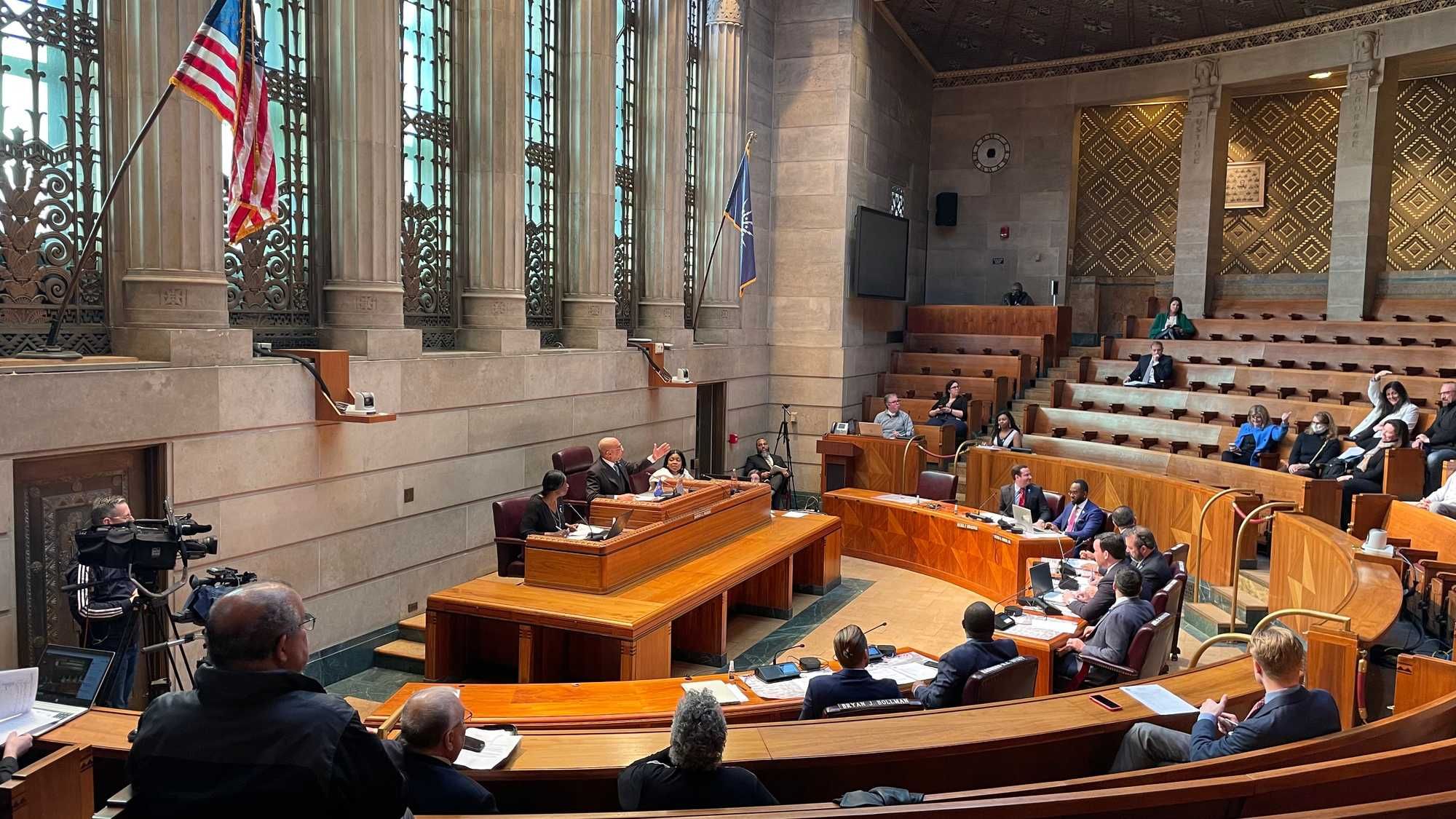
Meanwhile, Calhoun and other members of their advisory don't buy the true initiative of the Common Council's advisory board, saying it is simply a political move.
"They don't want true representation from the community, because they have true opinions and initiatives that will help the community," Calhoun said. "The community has spoken, and they do not want a board that's a representation of appointee model. We already have a similar structure called the Citizens Review Board that has done nothing. They've only met one time since 2019, and they draw a salary of $153,000 a year.
"When you have people whose positions are tied into city and county funding, it's hard to really be a true representation of the community, when your paychecks are tied into what they want you to recommend or say. So we need people who are not tied in, and whose recommendations come from the heart and may not necessarily come from what the Common Council wants us to say."
Any interested residents who want to apply for the Common Council's advisory board are instructed to find more information on the Council's Facebook page, or by contacting the Council clerk's office.