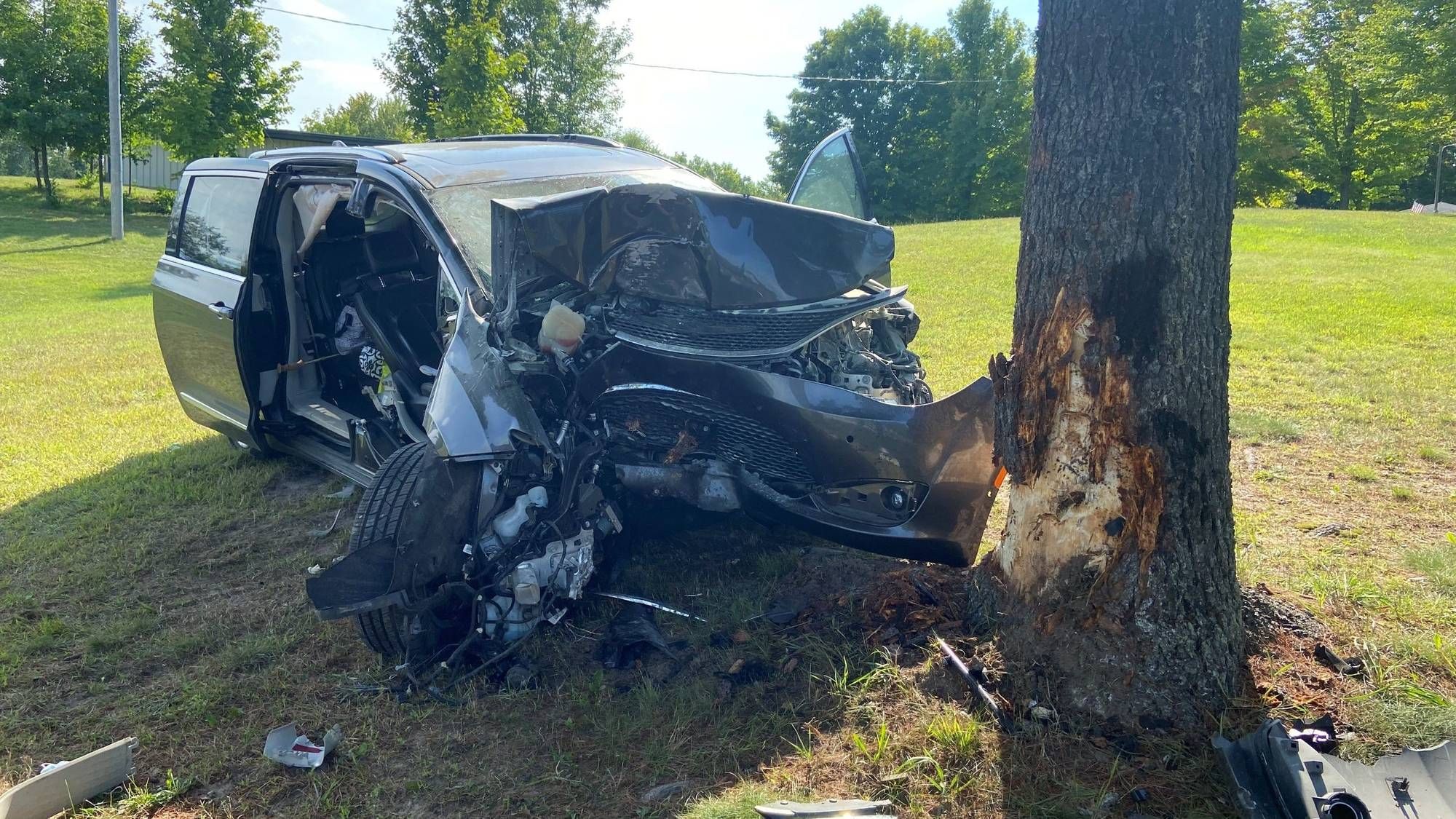


LUCE COUNTY, Mich. (WWJ) – What was supposed to be a weekend trip to see the northern lights in the Upper Peninsula for a Livonia family quickly turned into a dangerous situation.
Conservation officers with the Michigan Department of Natural Resources were called around 11:30 p.m. Saturday to help search for a Livonia woman, four children and a family dog after their minivan became stuck in deep snow along a seasonal county road.
DNR District Law Supervisor Lt. Eugene "Skip" Hagy said while the situation had a good ending, "it just as easily could have ended much differently."
Stephanie Knapp, 37, and four children ranging in age from 10 to 14 – three of her children and one who was a family friend – had traveled north from Wayne County in their Dodge Grand Caravan to view the northern lights, according to the DNR.
Their van ran out of gas earlier in the day near the end of their roughly six-hour, 400-mile trip, along Luce County Road 407.
Another traveler from Metro Detroit, 39-year-old Brian Gorski of Allen Park, gave Knapp a ride to Grand Marais to get gas for the minivan. Gorski told officials he was in the area to look for rocks along the Lake Superior shoreline.
During this time, Knapp contacted a friend to let them know where she was and that she was continuing on toward the Lake Superior State Forest Campground, about12 miles east of Grand Marais and six miles west of Muskallonge Lake State Park.
The campground remains open year-round, but portions of the road leading to it are not plowed during the wintertime, according to the DNR.
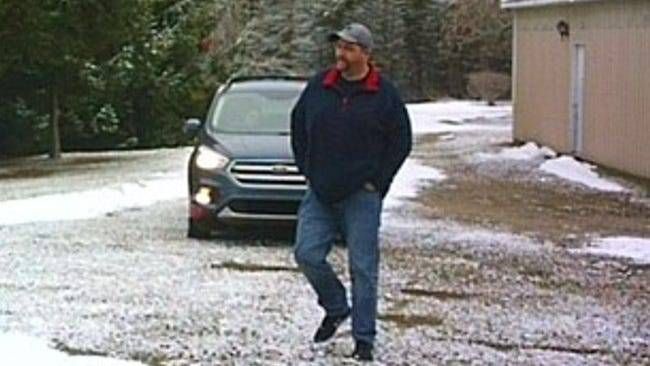
Knapp's friend called 911 emergency dispatchers when they had not heard back from Knapp several hours later.
Vinson and VanOosten arrived at a staging area for the search shortly after midnight Sunday. Luce County Sheriff's Deputy Zachariah Kitzman radioed the conservation officers that he had started on foot toward the last-known location for the vehicle.
As the deputy walked, he came across Gorski's vehicle stuck in the snow on the road. Officers said Gorski had made it approximately 1.5 miles from where he had left Knapp before getting stuck himself.
The conservation officers then used their DNR-issued snowmobile and all-terrain vehicle to travel to Gorski. Vinson assisted him in getting his 4x4 off-road capable truck moving again.
Conservation officers eventually found Knapp around 1:15 a.m., trying to dig the minivan out of the snow about six miles from the end of the plowed section of road. The children and the dog were safe inside the vehicle.
Knapp told Vinson that she believed the vehicle was almost free from the snow.
After evaluating the condition of the road, Vinson told Knapp that without the aid of an off-road towing service she would likely continue to get stuck and be unable to drive the van out until later in the month or in early May.
Knapp considered her options and then agreed it best to have a towing service retrieve the vehicle. While they waited for the wrecker, the conservation officers built a small campfire to help Knapp, the children and the dog warm-up.
A towing service eventually freed the vehicle around 3:30 a.m. and towed it to the nearest plowed portion of County Road 407, located just east of Grand Marais.
As the conservation officers cleared the scene at about 3:45 a.m., they were traveling to the staging area when they again came upon Gorski who was now stuck again.
Gorski said he had spoken to the towing service operator. If Gorski could not get his vehicle out, the operator had said he would help him too.
Conservation officers remind the public it's always best to know current, forecasted and local road and weather conditions and personal limitations before taking on excursions in unfamiliar places.
"People get an idea that something seems like a fun adventure and jump into situations without having any local knowledge or being prepared," Hagy said. "Taking a two-wheel drive vehicle into an area with some of the heaviest snowfalls in the state, that is only accessible by snowmobile or ORVs at this time of year, is a recipe for trouble."