


The US Army Corps of Engineers has again started monitoring saltwater pushing up the Mississippi River.
The saltwater wedge is not impacting any drinking water systems as of now, like it did last year in parts of Plaquemines Parish.
A lack of upriver rainfall leading to reduced water flow has officials keeping an eye on the situation, though.
The Corps explains, "Under normal conditions, the downstream flow of the river prevents significant upriver progression of the salt water. However, in times of extreme low volume water flow... unimpeded salt water can travel upriver and threaten municipal drinking water and industrial water supplies."
As of this week, the saltwater has pushed about 40 miles up the river from the Gulf of Mexico. That is still well south of the first water intake.
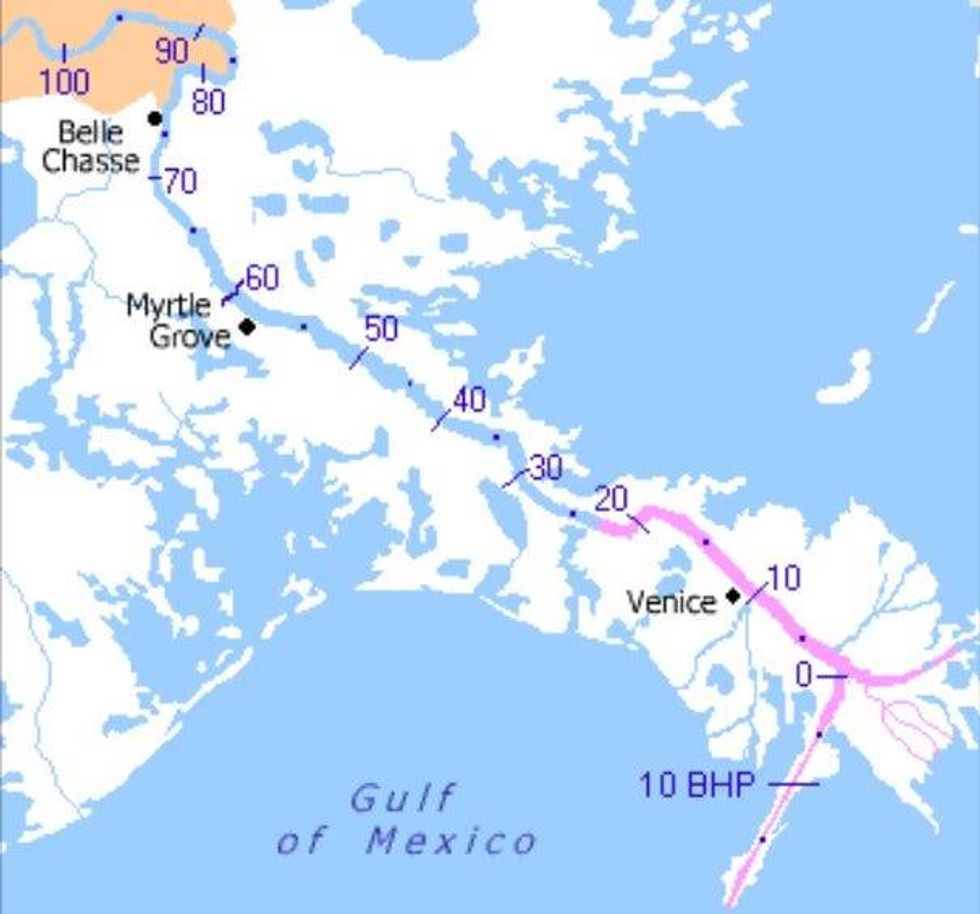 USACE
USACE
Authorities do not know how far it will move upriver this year.
Last year, fears developed that the wedge could impact the drinking water in more populated areas of upper Plaquemines, St. Bernard Jefferson and Orleans parishes. It never got that far.
Barges of freshwater, pipelines and desalination gear mitigated the impacts further down the river last year.
Crews also constructed an underwater sill to block the more dense saltwater flow along the bottom of the river.
Saltwater intrusion has been an issue in previous years including 1988, 1999, 2012, 2022 and 2023.


