


"Chicago's Living Habitat" at the Chicago Architecture Center (CAC) is a story of people and nature.
"This is a part of the world where major ecological systems converge," said Michael Davidson, President and CEO of conservation organization Openlands. "Those big systems come together in this region and create an extraordinary array of ecological biodiversity."
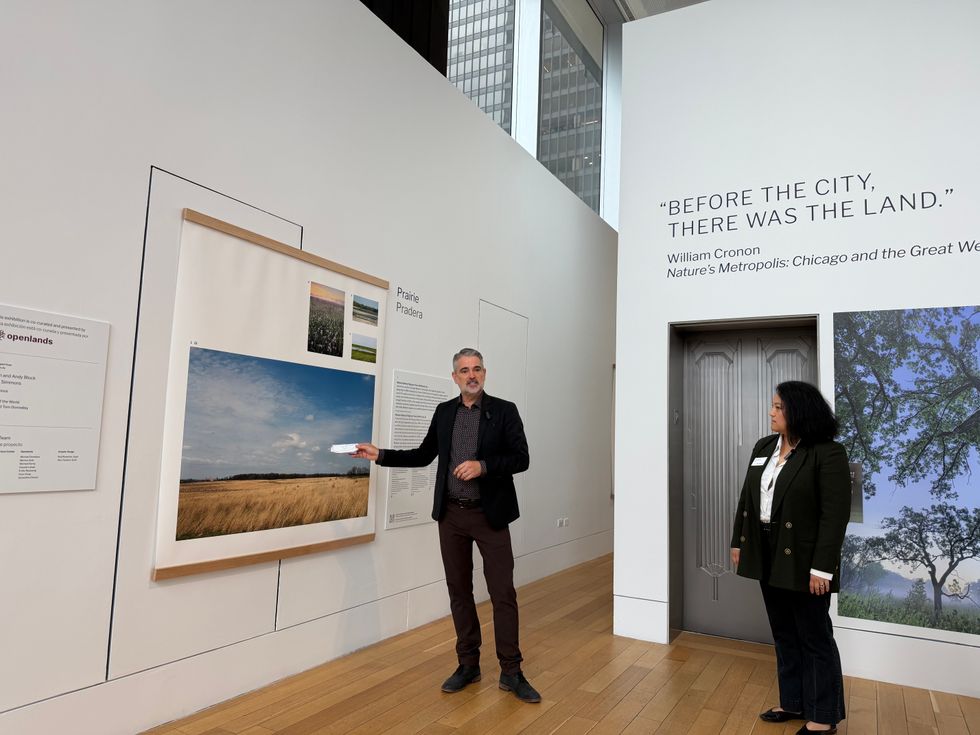
President and CEO of Openlands Michael Davidson leads a media tour of "Chicago's Living Habitat," a new exhibit at the Chicago Architecture Center opening Thursday. The exhibit leads visitors through the Chicago region's different landscapes.
Carolina Garibay
"Chicago's Living Habitat" is a collaborative effort between Openlands, the Chicago Architecture Center and Studio Gang, led by renowned architect Jeanne Gang. The exhibit acts as an introduction to Studio Gang's "Flyway City" exhibit at the CAC.
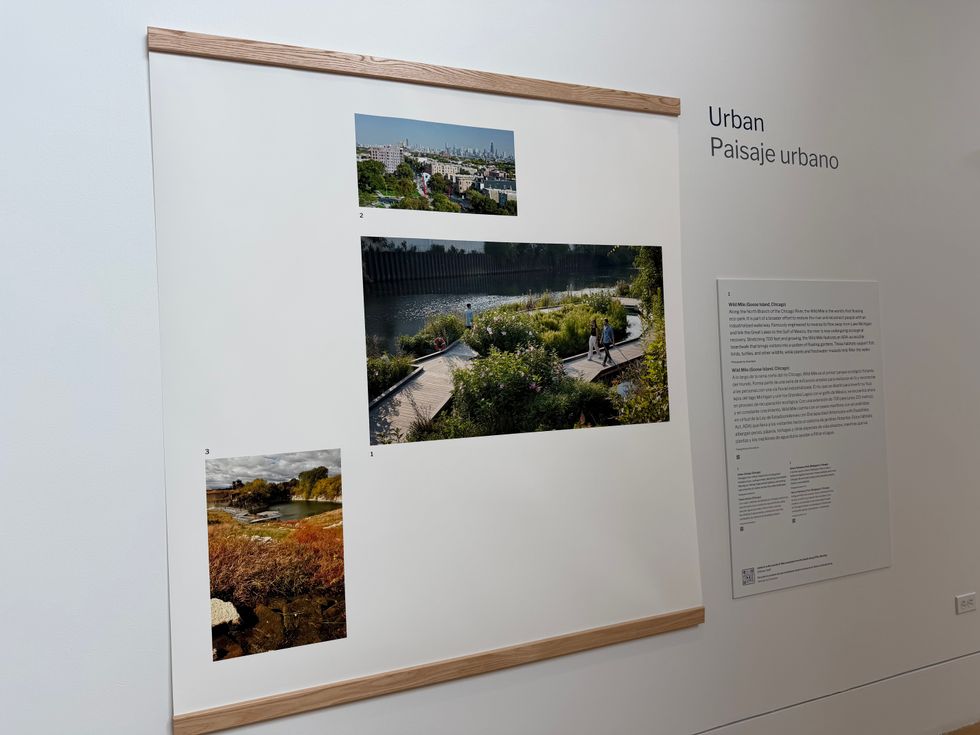
"It's a selection of different types of landscapes because this region is extraordinarily diverse ecologically," he said. "You've got prairie and wetland and savannah and dunes and swales and urban. We wanted people to see that there's just incredible diversity here, and be inspired by that."
Carolina Garibay
As you walk around the exhibit, you'll find descriptions of these different ecosystems and examples of where you can find them in the Chicago region. You might recognize places like the Hackmatack National Wildlife Refugee at the Illinois-Wisconsin Border, the Montrose Beach Bird Sanctuary in Lincoln Park and the Wild Mile in Goose Island.
"We wanted people to walk through the exhibit and learn that, 'Wow, I had no idea the Chicago region, which is so kind of built out and built up, was hiding such important biodiversity practically in our own backyards,'" Davidson said.
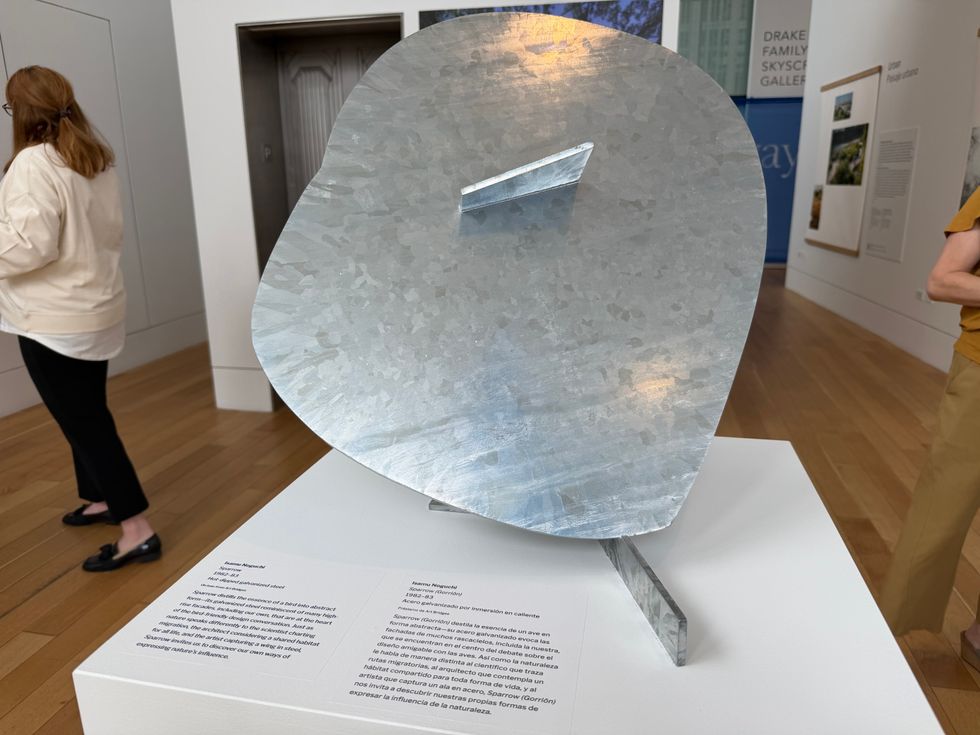
He said the idea is to have visitors walk through "Chicago's Living Habitat" to get a better idea of what makes the Chicago area so unique and rich in biodiversity before entering "Flyway City," which raises awareness about bird collisions in urban environments.
"We're hoping that people leave the 'Chicago's Living Habitat' exhibit before they go into 'Flyaway City,' already sold on the kind of ecological importance of this region, and so by the time they go into Flyway City and they are educated about how to design our cities. They are already thinking we need to design our cities with nature in mind," he said.
Carolina Garibay
Within the exhibit, visitors can also scan QR codes that will lead them to different soundscapes from the region's ecosystems.
"I want people to look at the landscapes, the beautiful photos and want them to read the scripts under each photo and think, 'Wow, that is so beautiful. I've been there' or 'I know that's across town or across the county and I want more of that in my life,'" he said.
"Chicago's Living Habitat" and "Flyway City" open Thursday, June 11 at the Chicago Architecture Center.