

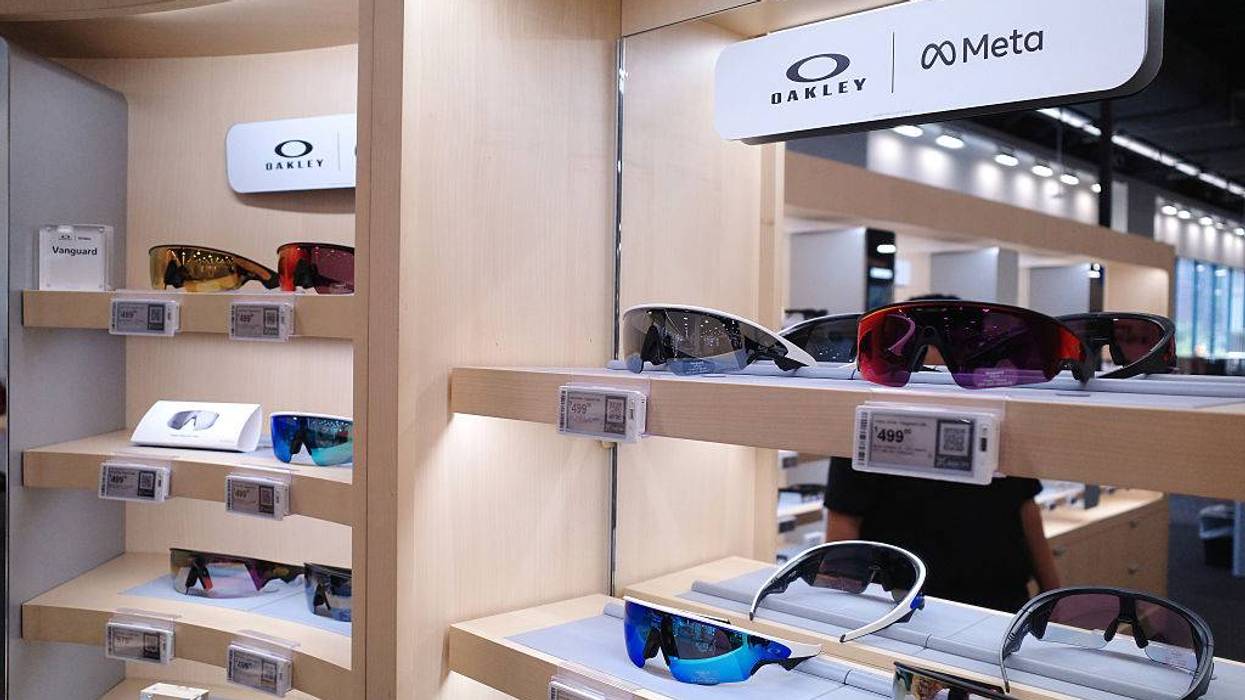

Last month, Meta announced the launch of Muse, which it billed as an artificial intelligence assistant “built for everyone.” In the announcement, Meta touted the AI agent’s ability to do things like book travel and negotiate.
Imagining a world where everyone has their own personal AI might seem exciting to some, but it also brings up concerns – like the question of who pays when AI makes a mistake. Chief Strategy and Growth Officer Phil Bruno at ACI Worldwide in New York joined Rob Hart on WBBM Newsradio’s Noon Business Hour this week to address some of these questions.
Bruno said that, right now, the answer to who is responsible for AI’s mistakes is “undefined and very unclear because the rules for using your credit card and debit card haven’t been made for an agentic world.” He added that card associations are “working furiously” to establish those rules.
With the rules still pending, what happens today if someone tries to send their AI agent on a shopping trip and is messes something up?
“It depends upon the type of mistake that it’s making, right? If the AI agent acting on your behalf buys, let’s say, the wrong size shoes for you, then it’s the agent that has created the issue versus if the merchant shipped the wrong pair of shoes for you,” said Bruno. “In the latter, it’s the merchant’s fault, and that’s something that can happen today. On the first side, on the earlier question, it is acting on your behalf, so that’s your… set of issues as a consumer.”
Bruno noted that some merchants, including tech giant Amazon, don’t permit third party AI shopping agents. Others, like Target and Home Depot, are allowing AI to go on shopping trips. Another interesting thing is happening too – AI is interacting with AI while it shops.
“So merchants are putting their own agents in to help interact with those shoppers,” said Bruno. “So you have, you know, I call it ‘bot-to-bot combat’ going on, uh as, as these agents are shopping.”
Tech pioneer Bill Gates has previously predicted that everyone will eventually have their own AI assistant, though he has recently raised concerns about AI. Precedence Research data cited by the Harvard Business Review that estimates the global agentic AI market size will grow from $8 billion (reported last year) to $199 billion by 2034.