


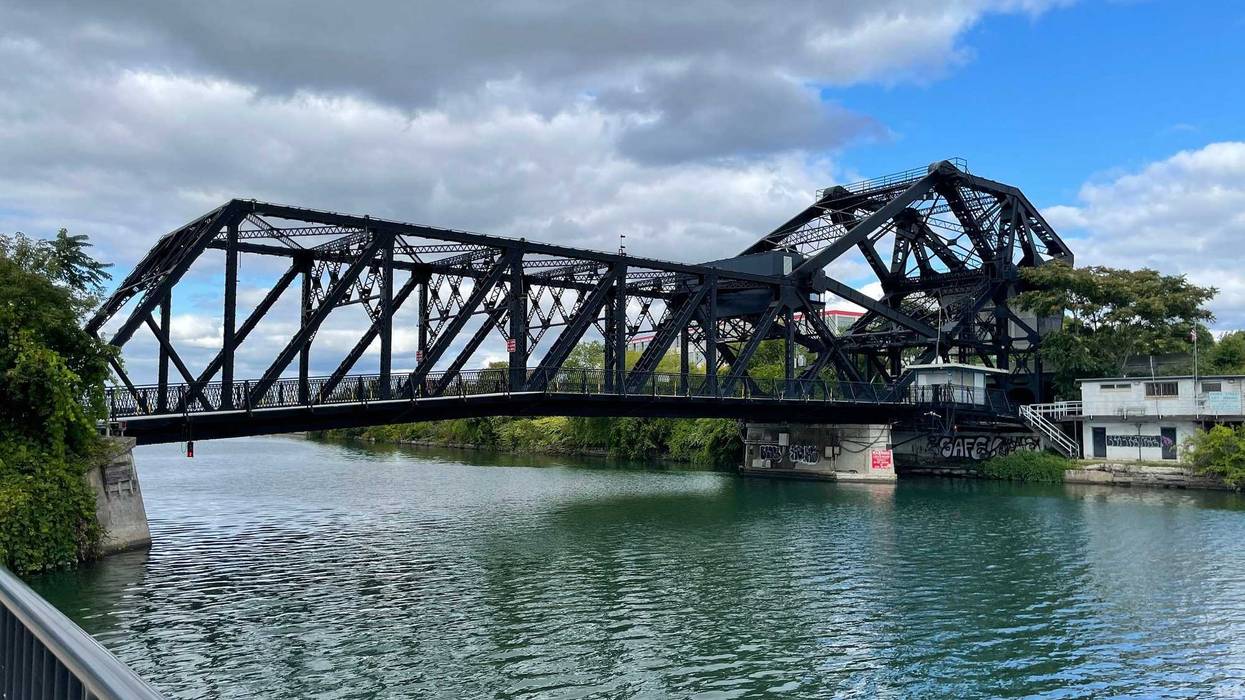

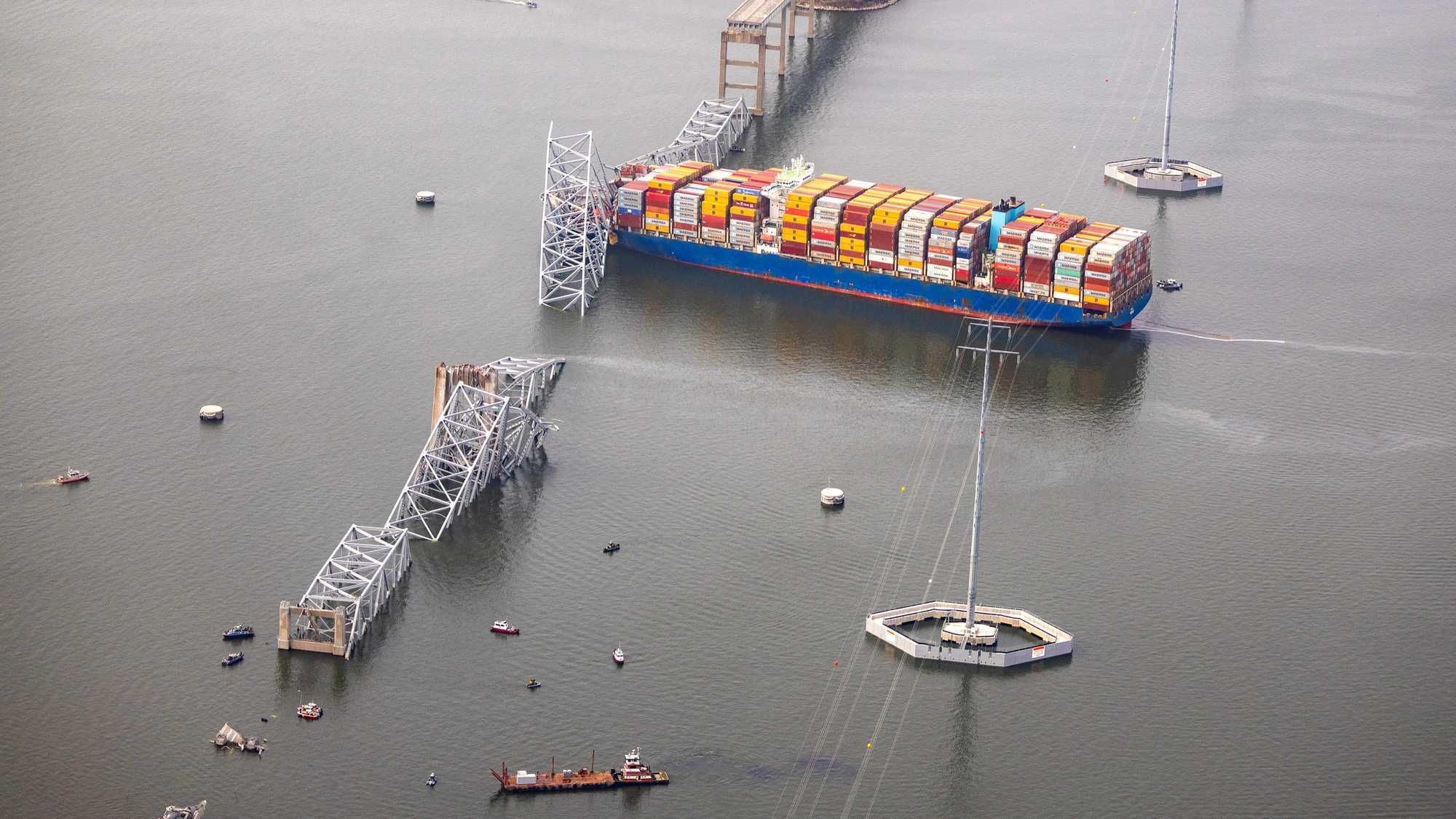
Buffalo, N.Y. (WBEN) - The collapse of the Francis Scott Key Bridge in Baltimore, Maryland early Tuesday morning is bringing about more awareness with the infrastructure of bridges across the country, no matter how big or small.
In the City of Buffalo, engineer Nolan Skipper says bridges range from fair to good condition, but there are a few bridges out there that he knows need some investment made in order to ensure structural integrity.
"We have a number of other bridges that are on the radar for continued maintenance, as simple as curb and joint projects, bridge washing projects - we'll be out bridge washing in the next couple of weeks here. So we have our low-level maintenance, but we also range to those bigger projects too, where we're investing quite a bit of money thanks to city, state, and federal levels on our bridges," said Skipper in an interview with WBEN on Wednesday. "A few to mention, we just got done replacing South Ogden Street bridge, the South Park loop bridge is also coming to a wrap on construction. We know our bridges range in condition from fair to good, and we're continuing to work through those ones that are on the lower scale rating to get those investments underway."
While bridges across Buffalo that are under the city's jurisdiction are not quite to the magnitude of those in Baltimore and other cities across the nation, Skipper understands very well that bridge infrastructure is a very costly, but also very delicate piece of the puzzle. Regardless, he knows the investments put in for city-owned bridges and capital improvements are key to keeping unforeseen incidents from happening.
When it comes to measures such as bridge maintenance, or inspections, Skipper says the city has a consultant that's hired to stay up on the process from year-to-year, while the New York State Department of Transportation does its line of inspections.
"We kind of work together in the sense of if the DOT, New York State flags anything, our consultant will review it and we will proceed accordingly. It might be the simplest of maintenance projects that might be $5,000-$10,000, and other instances, we might have projects that come out of it, like our Louisiana Street bridge, where we need $20 million to do a full replacement of the bridge," Skipper explained.
In Baltimore, after the powerless cargo ship rammed into one of the support columns of the Key Bridge, bringing down most of the bridge that spans the Patapsco River, some engineers and bridge designers questioned the structural integrity of the bridge. This includes the presence of protective barriers like support piers.
Skipper says city engineers have designed bridges locally for certain structural capacity, depending on where the bridge is and the loads that might go over it regularly.
"We design accordingly to all standards, but you can only design to a point for standards, though," he said. "Obviously, if there's a freak event, that might bring unforeseen conditions. A lot of people know in the '50s, we had our Michigan lift bridge go down. That's one of those scenarios, freak accidents where we had to rebuild an entire bridge that we owned."
When it comes to support measures with some bridges across the city, Skipper says there are a couple of things to consider.
One big piece to consider, specifically, every year is the presence of ice jamming during the winter along some of the city's waterways.
"A big thing is we do not have any piers that sit within our navigational channel. We have movable bridges that are pierless, so that's been a big thing over time that's helped us avoid any catastrophic ice jamming that would then have that trickle down impact to potential navigational traffic," Skipper explained.
The other big element, and something the city is constantly looking at based on inspections, is continued investment toward bridges.
"The Ohio Street lift bridge we just got done with a $20 million project to get that up to date, in terms of structural, mechanical, electronics, everything was updated on that bridge. So that continued maintenance, making sure we're on top of it with investments is the key to do our best to stay up on our bridges," Skipper noted.