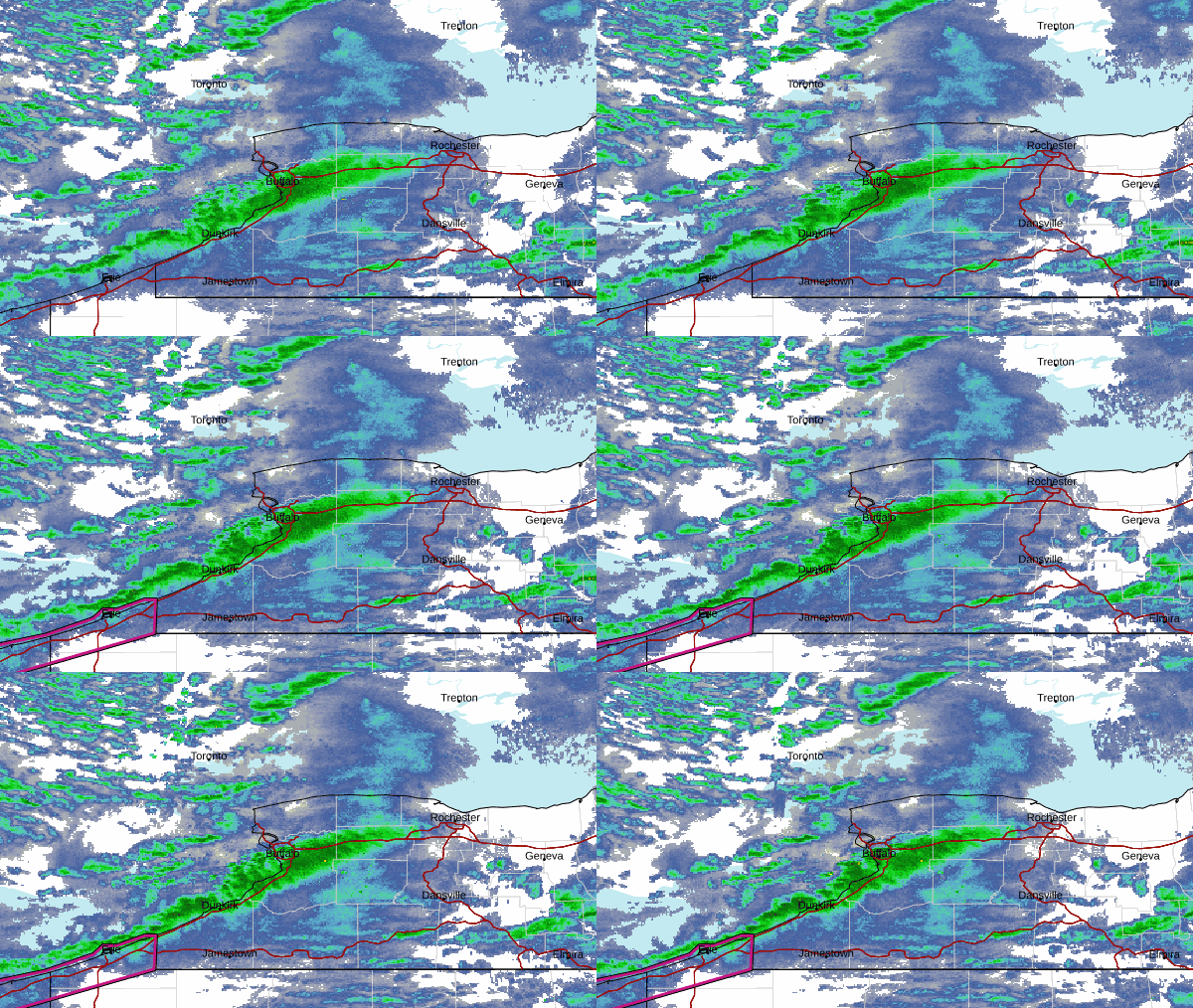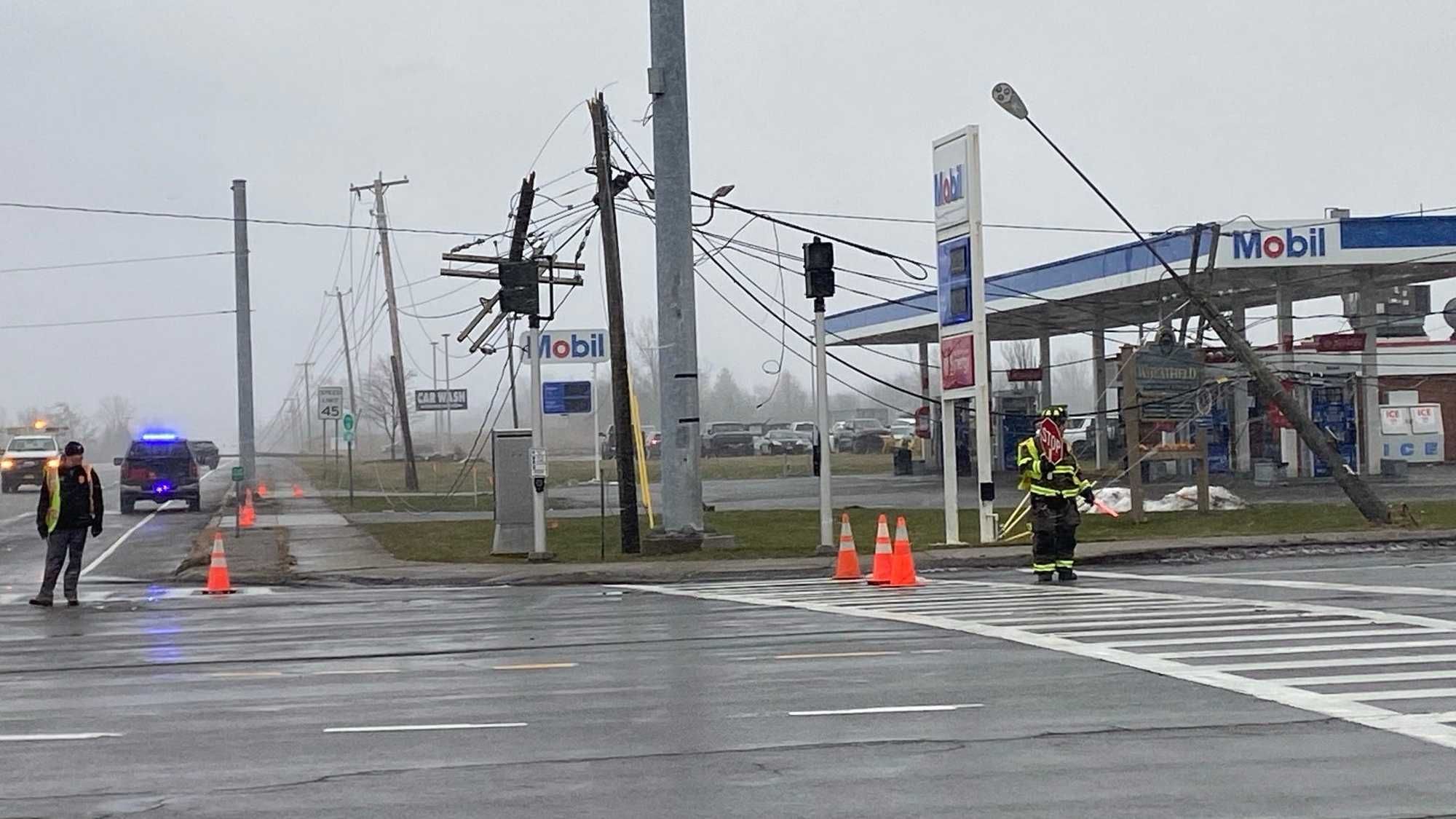



Buffalo, N.Y. (WBEN) - Western New York faced the brunt of some very strong and damaging winds on Monday that slammed the Buffalo-Niagara region through the day. This led to not only several power outages, but also some localized flooding in spots along the Lake Erie shoreline.
However, work has been done over the years in Buffalo by the U.S. Army Corps of Engineers in an effort to strengthen the Lake Erie shoreline to limit the flooding and other issues that have hindered the region in the past.
"We've got a team of engineers and scientists - in particular, coastal engineers, civil structural engineers, geotechnical engineers - that go through, and what they're looking at are different locations and what we're looking to protect. They analyze things such as the water depths, the wave forces, wave direction and determining the types of protection that are required for each particular situation that we're under," said Todd Kufel, design branch chief for the Buffalo District of the U.S. Army Corps of Engineers.
One of the key areas of focus over the years for engineers has been the Lake Erie shoreline along Route 5 in Athol Springs, a spot infamous for crashing waves and relentless winds during winter storms such as this.
"We had a situation where there was a vertical wall there at the time, and when the wave forces were coming in, they would splash directly against that wall and onto Route 5, causing a lot of problems with freezing and what have you. So the solution that we proposed, and what we've implemented out there was to construct, kind of, a revetment with rubble mound stone, approximately three-foot diameter stone out there, about 3-to-5 tons in size," Kufel explained with WBEN. "What that does is dissipate the wave energy that comes in so as the waves are approaching, the energy gets knocked down with the stone and we get a lesser degree of overspray, and it reduces the amount of freezing on Route 5."
Kufel also explains the "splash apron" that is in place to collect some of the water that splashes up onto Route 5. He says the intent with a situation like that is to prevent waves from crashing onto the road.
Another area of focus for the U.S. Army Corps of Engineers along the Lake Erie shoreline over the years has been the Buffalo South Breakwater, which is a bit of a different environment in more of the open water.
"You've got about 10-to-12-feet deep water, and we're looking at a larger armor stone on the order of could be 5-to-28 tons, much larger. And that out there is intended to knock the waves down prior to getting to the Buffalo Harbor," Kufel explained. "That's more of a protective structure out in the open water environment, and certainly with the higher conditions that we've got out here with, what could be, a seiche event or high wind forces coming in, the stone that we size is intended to mitigate those forces and help reduce as much as possible, the wave energy coming into the shore."
When examining how well the Lake Erie shoreline handles such weather event with high winds, rising water levels and crashing waves, Kufel says engineers have to find a balance, in terms of design, and making sure they're looking at the right conditions.
"We can't always design for the worst-case scenario. We've got to figure out what is reasonable, so that's kind of where our engineers really look at the wave forces and what is historically the lake levels and other factors that come into play," Kufel noted. "I think one of the key lessons is ensuring we are properly sizing the armor stone to make sure that we're getting that interlocking and helping to avoid getting the forces - whether it'd be not only wind and waves, but ice in the winter as well - from dislodging and creating those breaches. So I think that really helps us establish a firm basis for the armor stone sizing that we include on our structures."
When looking at how the shoreline handled this particular weather event on Monday, Kufel says it's about looking at some of the conditions and how the structures responded not only during the event, but after the event.
"Are we seeing any damage? Are we seeing any areas where, perhaps, we may have had gaps that we need to look at? Increasing the armor stone size and based upon the levels of water that we're seeing or the wind forces that are coming in? I think that really helps us after the fact, kind of looking at things and making sure we do our condition assessments and where we can look to improve future improvements," Kufel said.
So what other improvements are in line for the Buffalo District of the U.S. Army Corps of Engineers along the Lake Erie shoreline? One example Kufel points to is their confined disposal facility, right near the South Breakwater.
"We've got a pretty robust enclosure on our confined disposal facility, where we placed stretch material, and we've been doing that in phases. And really looking at not only increasing the armor stone size that we use there to make sure that we're appropriately protecting the CDF (confined disposal facility), but also that we are appropriately looking at the stability of the toe of the structure itself. To avoid any undermining or any potential instability created by these really large stones," he explained.